Read also
No related articles
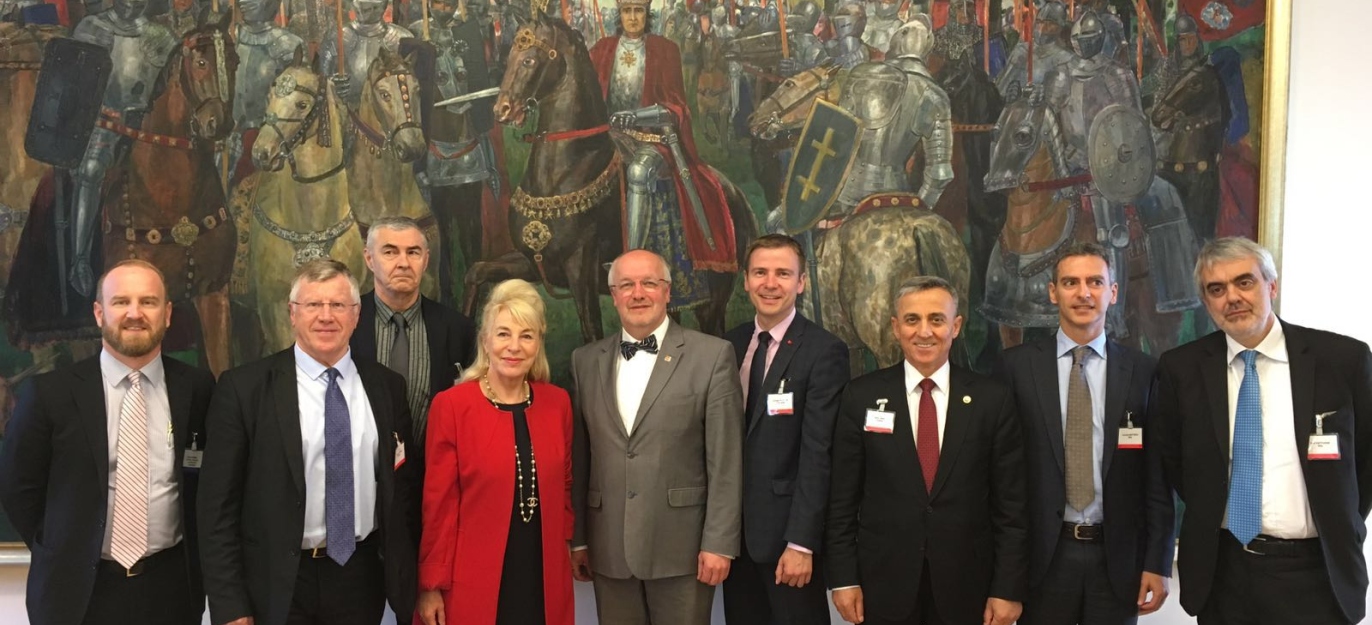
Tallinn, 13 May 2016 – Members of the NATO Parliamentary Assembly’s Defence and Security Committee (DSC) visited Lithuania, Latvia, and Estonia in a pre-Summit demonstration of solidarity with their colleagues in the region.
As Xavier Pintat, Chairman of the Sub-Committee on Future Security and Defence Capabilities (DSCFC), stressed: “This is a mission to show not only solidarity with our peers in the region, but also to understand the unique security challenges they face along the eastern flank of the Alliance.” Pintat led the delegation of parliamentarians representing eight different Allied countries through the Alliance’s entire Baltic region from 9-13 May.
As DSC Chairwoman Nicole Ameline (France) noted during the visit: Our parliamentary colleagues in the region gave us real in-depth understanding of the range of challenges facing the region. We are looking forward to the Warsaw Summit as we are confident the Alliance will be able to bolster its reassurance package to the region and strengthen its deterrence posture. In an era of wide ranging threats facing the Alliance, particularly in Europe, member state solidarity will be the key to success.
The Baltics are often cited as an area of strategic weakness for the NATO Alliance. Much attention has been paid to the region at the military, political, and academic levels since Russia’s brazen seizure and annexation of Crimea in the winter of 2014. To gain a better understanding of the unique threat landscape in the region the delegation visited NATO’s air policing mission in Siauliai, Lithuania, the Latvian naval port of Liepaja, and attended the VIP ceremony for the Estonian-led Allied ground exercise Spring Storm in Voru, Estonia.
Baltic State parliamentarians and other high-level officials recognised the importance of the increased Alliance presence in the region and stressed the need for more. Unanimously, Baltic State Defence Ministers called for a permanent NATO presence in the region, at the very least in the form of prepositioned heavy weaponry and continuously rotating Allied forces.
NATO Heads of State will meet for their upcoming summit from 8-9 July in Warsaw, Poland. Much anticipation surrounds the outcomes of the summit, as a steady deterioration in the NATO-Russia relationship in the wake of Russia’s intervention in Ukraine and annexation of Crimea has brought the Alliance’s focus back to the European security environment.
The parliamentary mission included visits to all three capitals as well as military installations representing the distinct air, sea, and land challenges facing the region.
No related articles