Read also
No related articles
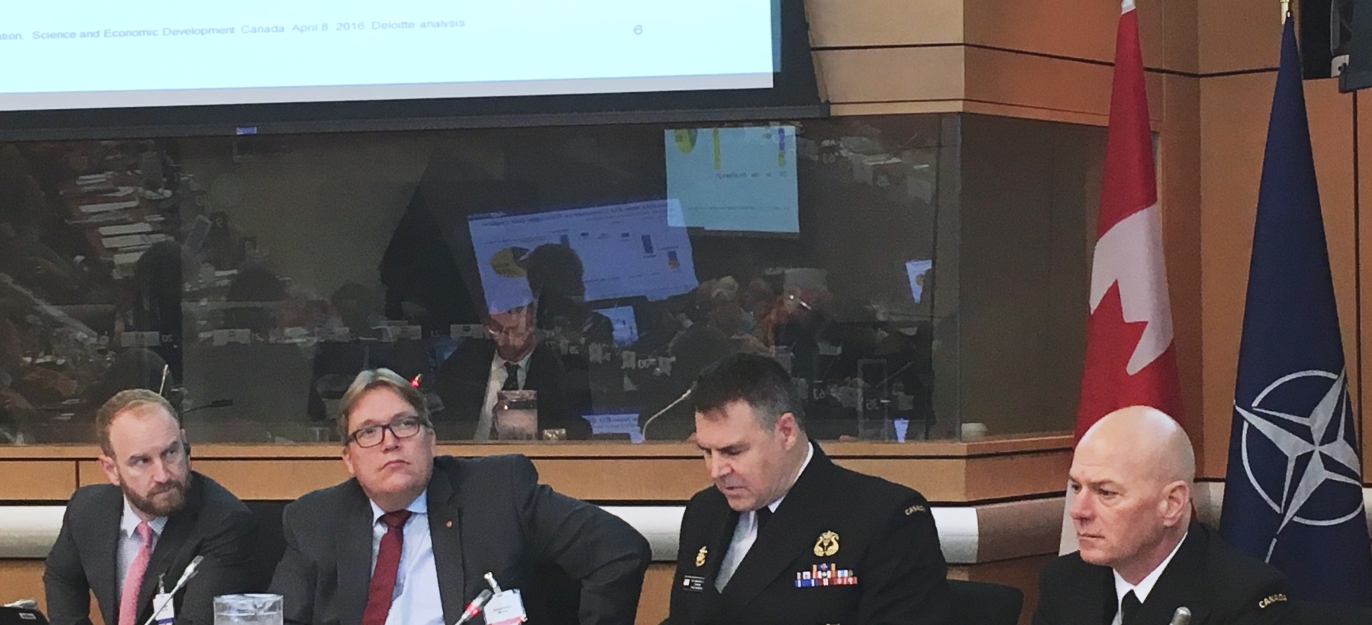
Brussels, 7 October 2016 - Canada stepped up its international security commitments at NATO’s Summit in Warsaw this past July. Ottawa is committing approximately 450 soldiers to Europe as it will assume leadership of a battalion heading to Latvia in 2017 as part of NATO’s new enhanced forward presence in the area. In addition, Canada will continue to commit resources at home and abroad in support of broader international stability, from management of the Syrian refugee crisis to security and development assistance in Afghanistan.
While the increasingly complex international security environment is forcing Canada to reconsider its international security commitments, it also understands the need to reinvest in its North American security commitments, which now include a tri-coastal security commitment as Canada’s Arctic coast becomes increasingly accessible.
As it seeks to meet the range of security requirements identified in its recent national defence review as well as Warsaw Summit pledges, the Trudeau government, however, confronts serious defence budget pressures and a range of dilemmas related to force modernisation and the procurement of major defence systems. Canada’s defence budget currently hovers around 1% GDP, about half the commitment made by all NATO member states at the Wales Summit over two years ago. At the same time, Canada has acted with alacrity, generosity and innovation in its policy of bringing Syrian refugees from Jordan, Lebanon, Turkey and elsewhere in the region to settle in Canada. These were the critical messages delivered to a delegation of NATO Parliamentarians that visited Ottawa from 26-28 September.
John McKay, the Parliamentary Secretary of the Minister of National Defence, told the delegation that while Canada is making important security contributions in the Baltics and Afghanistan, its current level of defence spending has led to delays in key procurement projects. McKay stressed to the delegation that Canada understands the changes in international security environment require Canada to play a new, wider role at home and abroad.
As such, Canada is working to bring what it can to the table: from defence capacity building projects in Iraq, to being a framework nation for the new NATO battalion to be stood up in Latvia, to development and security assistance to places like Afghanistan and beyond. A key challenge, McKay said, lies in convincing the Canadian public that this demands financial sacrifices at home.
Canada also needs to refocus attention on North American security, which means building up its naval and air capabilities via the procurement of new large weapons platforms from the F-35 joint strike fighter to a modern fleet to guard its Arctic coastline. Vice-Admiral Ron Lloyd, Commander of the Royal Canadian Navy, told the delegation that Canada needs multipurpose destroyers and a new class of frigates to carry out both anti-submarine and air defence missions. In addition, Canada will also seek to improve its intelligence, surveillance, and reconnaissance platforms.
David Perry, a Senior Analyst at the Canadian Global Affairs Institute, however, reported that current and predicted funding levels prevent the military from carrying out these plans. As a result, Canada will either have to find more funding or reduce its ambitions. The current disconnect between ambition and funding, he suggested, is not sustainable.
Canada’s contributions to global security, however, are not simply military. Dawn Edeland who has led Canada’s refugee resettlement policy told the delegation that the sudden influx of nearly 26,000 Syrian refugees into Canada over a very limited period of time is demanding a massive coordination effort across government ministries, provincial and local governments, international partners, and civil society organisations both within and beyond Canada. The Trudeau government has made refugee resettlement a top policy priority and rapidly mobilised personnel, resources and diplomatic capital to bring in a very large number of Syrian refugees in a short period of time.
The delegation learned that Canada conducts both a government-led effort and a private resettlement programme engaging Canadian civil society organizations and citizens directly in the process. This dual strategy has greatly facilitated a highly complex initiative entailing identifying possible refugees to bring to the country, full screening, medical checkups, transportation to Canada, the provision of housing, food, health care, and other basic social services, settlement and community integration, language training and ultimately employment. Canadian officials noted they expect 90% of the new Syrian refugees will eventually be on the path to Canadian citizenship.
In discussions with officials, delegation members noted that the situation in Canada is very different from that of Europe. Canada’s geographical isolation allows it the time to screen refugees while its geographical breadth has made it possible to settle these refugees across the country. Several members nonetheless suggested that Canada’s unique engagement of civil society in this process offers a fresh approach that might be useful for other Allied countries. Canada has begun to share its experiences with several interested countries.
Twenty six national parliamentarians from 14 allied countries participated in the visit to Canada, the Bath Iron Works Shipyard in Maine and Boston and Harvard Universities. The delegation, led by the Norwegian MP, Sverre Myrli, and the French MP, Francis Hillmeyer, consisted of members of the NATO PA’s Sub-Committee on Transatlantic Defence and Security Cooperation and the Sub‑Committee on Transition and Development.
No related articles