Read also
No related articles
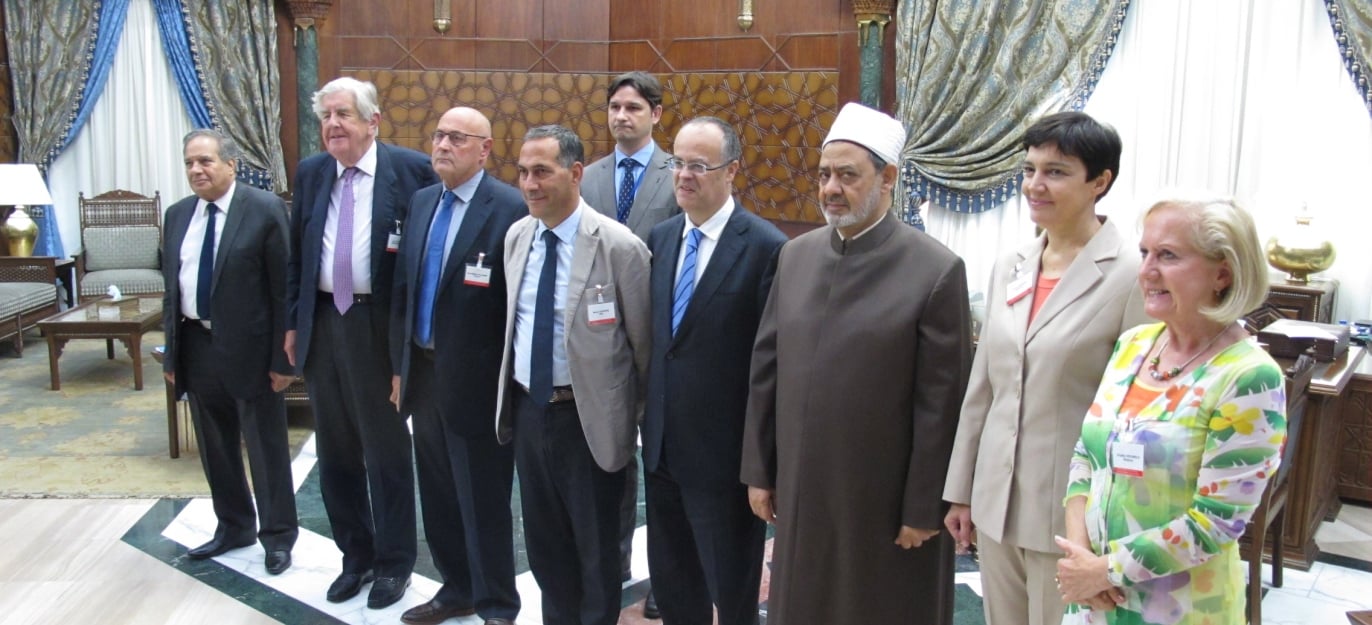
Cairo, 28 September 2016 - Egypt has come a long way since the turbulence of 2011-2013, but the Euro-Atlantic community should help cement stability in and around Egypt, which continues to face multiple challenges from all directions, lawmakers from the NATO Parliamentary Assembly were told during a visit to Cairo on 26-28 September.
Col. Gen. Sedki Sobhi Sayyid Ahmed, the Minister of Defence of Egypt, noted that Egypt narrowly escaped the same fate as Syria, Libya and Yemen, thanks to the determination of the Egyptian people and the pivotal role of the Egyptian army. Stability has been achieved in Egypt, and the terrorist infrastructure in the Sinai has been essentially annihilated, Egyptian officials argued. Nevertheless, Egypt is highly interested in developing further security cooperation with NATO and its member states and receiving assistance, such as drone and anti-IED capabilities.
The regional context remains precarious. Egypt is particularly concerned about the lack of unified authority in Libya, capable of preventing the activities of militant groups on its soil. Egyptian officials praised the role of the Libyan National Army, led by Khalifa Haftar, whom they saw as part of the solution, not as part of the problem. They urged the international community to lift the arms embargo on Libya to enable the Libyan army to fight against Daesh and other extremists.
Officials in Cairo are convinced that inter-ethnic and sectarian conflicts in the Middle East and North Africa are fuelled by outside powers, and that without such external interference the people of Syria and Yemen would be able to reach a peaceful solution to the conflicts they are immersed in.
NATO Parliamentarians also heard that the flow of refugees and migrants from the Middle East and North Africa has been redirected to Egypt and Libya as a result of the EU-Turkey deal. The EU was urged to be consistent and to offer adequate assistance to Egypt. Currently, the country hosts about 500,000 Syrian refugees and many more migrants from its African neighbours to the south.
Internally, the government is trying to cope with the disastrous legacy of the Muslim Brotherhood rule, the delegation heard. The delegation heard that, having experienced revolutions and given the international context, the people of Egypt first and foremost value stability. However, some Western interlocutors based in Cairo felt that some of the measures taken by the government to re-establish order are unnecessarily draconian. One suggested that these harsh measures reflect the government’s fear of potential popular discontent as Egypt is embarking on necessary but painful economic reforms.
H.E. Ahmed el-Tayeb, the Grand Imam of al-Azhar and a prominent authority in the Sunni Muslim world, explained to the delegation how Egyptian religious institutions are fighting extremism and promoting moderate Islam in Egypt and beyond. He offered the assistance of his institution to the Western countries faced with the problem of radicalisation in some of their communities.
The delegation of 8 members of the NATO PA Committee on the Civil Dimension of Security (CDS) was led by CDS Chairman Vitalino Canas (Portugal).
No related articles