Read also
No related articles
Brussels, 23 August 2016 - “Changes and challenges” characterize the Arctic region today and tomorrow. That was the main message of Major-General Kim Jesper Jørgensen, Head of the Arctic Command of the Defence Command Denmark, to members of parliament of the NATO Parliamentary Assembly. The Assembly’s Sub-Committee on Technology Trends and Security (STCTTS) of the Science and Technology Committee (STC) visited Copenhagen, Greenland, and the Faroe Islands from 15 to 19 August. Greenland and the Faroe Islands are parts of the Kingdom of Denmark, but have extensive types of self-government.
The visit focused on the impact of climate change on the region, its increasing geostrategic importance, security challenges, and prospects for closer regional and international cooperation. Interlocutors included Greenlandic and Faroese government officials and fellow parliamentarians as well as Danish Defence Command officials. Fourteen members of parliament from 12 NATO member states took part in the visit. The delegation was jointly led by Jacques Gautier (Vice-Chairman, STC, France), Bruno Vitorino (Vice-Chairman, STC, Portugal), Philippe Vitel (General Rapporteur, STC, France), and Osman Askin Bak (Special Rapporteur, STC, Turkey).
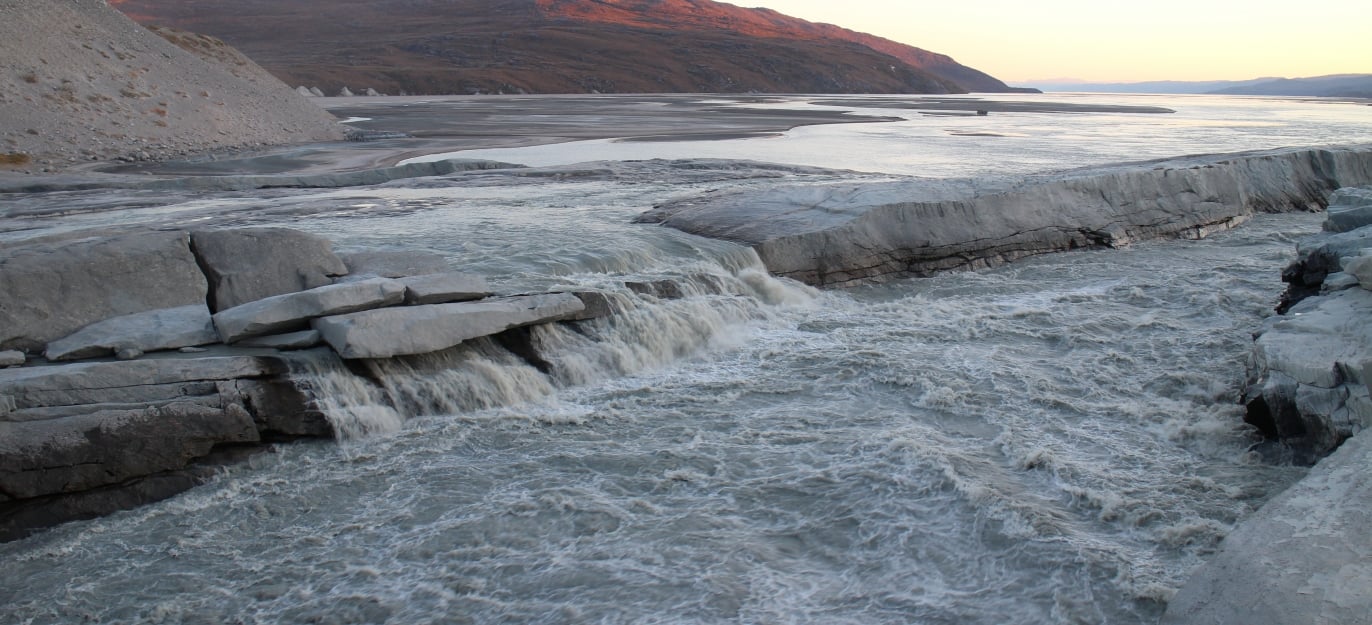
Greenland’s land mass equals the combined area of Germany and France, and the Faroe Islands exclusive economic zone amounts to the size of the United Kingdom’s land mass. Living and operating in such environments has always been extremely difficult. Today, climate change has become the main driver of new challenges, however. As energy resources become more accessible, new shipping routes open up, fish stocks migrate, and the number of tourists increase, environmental risks are on the rise and search and rescue demands soar.
Vittus Qujaukitsoq, Greenland’s Minister for Industry, Labour and Trade and Foreign Affairs, emphasized that Greenlanders are “seeing quite a rapid change in the Arctic”. The government’s responsibility thus lay in minimizing the risks from climate change, but also to make the best of the ensuing opportunities, in order to fight unemployment, harvest Greenland’s natural resources, and bring more tourists to the country. However, opposition parliamentarian and deputy chairperson of the Foreign and Security Policy Committee of the Inatsisartut (Parliament of Greenland), Sara Olsvig, did not think that there was anything positive to be gained from climate change’s effects on the Arctic. In this respect, she highlighted the role of Greenland on environmental protection within the Arctic Council. Høgni Hoydal, Deputy Prime Minister and Minister of Fisheries, also underlined that “everything is about fish” on the Faroe Islands and sustainable development of these living resources was thus crucial.
Unlike many foreign commentators, Major-General Jørgensen cautioned that he was not yet seeing a “rush to the Arctic”. Furthermore, he emphasized that the other Arctic states had good relations with Russian officials in various fora. Indeed, he saw further international cooperation with Russia in the Arctic region as desirable wherever practically and politically feasible.
In Greenland, the members also discussed these topics at the Greenland Institute of Natural Resources and Climate Research Centre as well as the Mineral Resources Directorate. They visited a Thetis-class ocean patrol vessel in Nuuk and Station Nord, a Danish military station housing the world’s northernmost runway and the Villum Research Station of the University of Århus. In the Faroe Islands, Poul Michelsen, the Islands’ Minister of Foreign Affairs and Trade, also presented his view on the future of the region during a visit of the Brimil offshore patrol vessel.
No related articles