Read also
No related articles
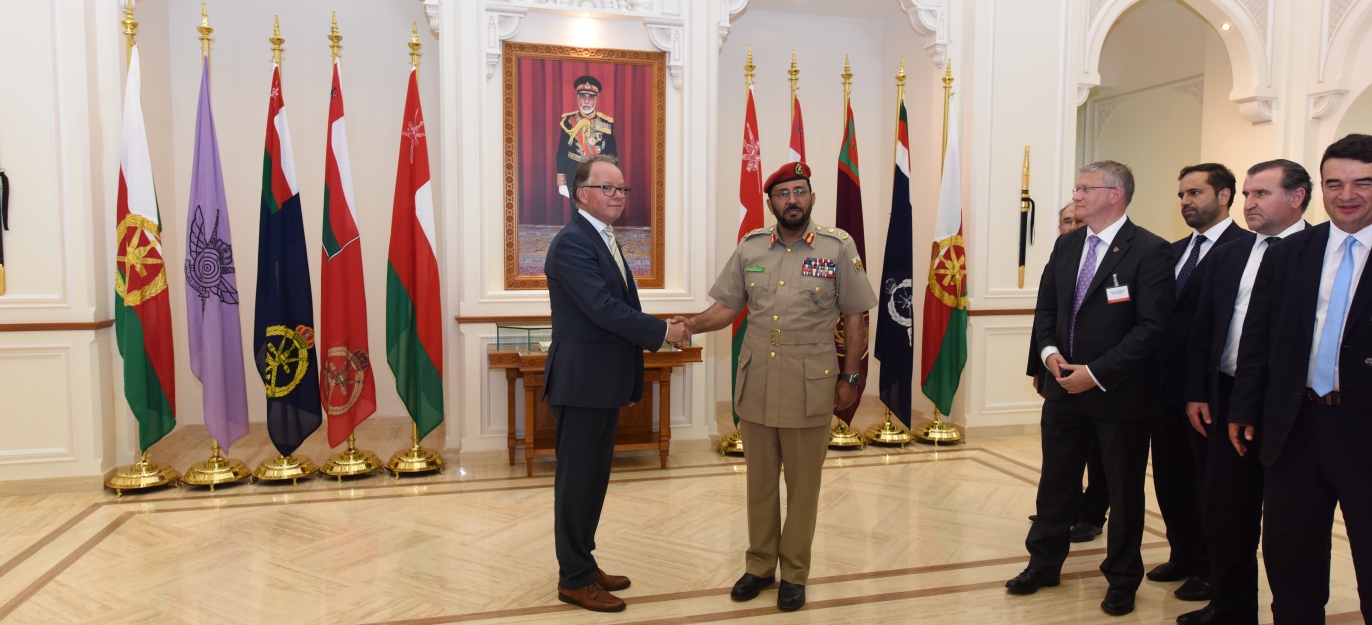
10 October 2016 - The security challenges facing the Gulf littoral states, particularly the civil wars in Syria and Yemen and the threat posed by Daesh, were at the top of the agenda of the visit of a delegation of the NATO Parliamentary Assembly to Oman during the week of 26 September.
Host country interlocutors, including Mohammed Awad Al Hassan, Acting Undersecretary of Diplomatic Affairs, and Major General Muhad Bin Mubarak Al Mashaiki, Secretary General in charge of Military Affairs, emphasised that the crises in Syria and Iraq have gained an international dimension with negative effects on regional stability.
While Oman is currently not facing a major threat by Daesh, the security of the country is impacted by the volatile security situation in the Gulf, the delegation learned. Tackling Daesh and other religious extremist groups will require international cooperation, particularly among the countries in the Gulf. However, regional tensions between littoral Gulf states continue to hamper progress in this fight. Omani officials were especially concerned about the deteriorating security situation in neighbouring Yemen.
Host country interlocutors, but also representatives of the diplomatic community, repeatedly stressed the crucial and positive role of His Majesty Sultan Qaboos bin Said al Said under whose leadership Oman has been a beacon of stability in a highly volatile region. Diplomatic representatives also noted that Oman, a member of the Gulf Co-operation Council (GCC), has long maintained an independent foreign policy, steering a cautious balance between maintaining a good relationship with Iran and its partnerships with the GCC member countries. Moreover, Oman is a crucial international mediator in many conflicts, including in Syria and in Yemen, and has played an important role in achieving the landmark international deal on Iran's nuclear programme in 2015. During the exchanges, Mohammed Awad al Hassan and other interlocutors expressed the view that the nuclear deal will, over time, help reduce regional tensions and that Iran will cooperate with other countries. More generally, host country officials repeatedly stressed the need to finding political solutions to the region’s many security issues through negotiations. With regard to Yemen, Dr. al Hassan and other interlocutors said that a military solution to the crisis is not possible. Ending this and other conflicts are a “matter of perseverance”, he said, but acknowledged that there is no magic formula of how to achieve the end of hostilities.
Economic and social issues further increase the volatility of the Gulf states, including that of Oman, NATO Parliamentarians were informed. Low energy prices pose a considerable challenge for all oil producing countries of the region. In the case of Oman, this has resulted in a decrease of GDP per person by some 17% in 2015. This is particularly relevant as Oman’s economy, like that of all other oil producing countries of the region, heavily depends on the income generated by oil. While Oman and the other Arab Gulf states are in the process of transforming their economies to make them less dependent on energy exports, this will take time, NATO Parliamentarians learned.
The delegation consisted of the Sub-Committee on Transatlantic Relations and the Officers of the Assembly’s Special Mediterranean and Middle East Group. The group comprised 20 parliamentarians from 9 NATO member countries led by Oyvind Halleraker (Norway), visited Muscat from 26 to 28 September, 2016. The purpose of the fact-finding visit was to obtain a comprehensive picture of the security challenges facing the Gulf littoral states and to learn about Oman’s views on possible ways to increase the stability of the Gulf region. During the visit, the delegation met with senior officials from the government of Oman and engaged in an active dialogue with the Consultative Council (Majlis A’Shura) and the State Council (Majlis A’Dawla).
No related articles