Lire aussi
No related articles
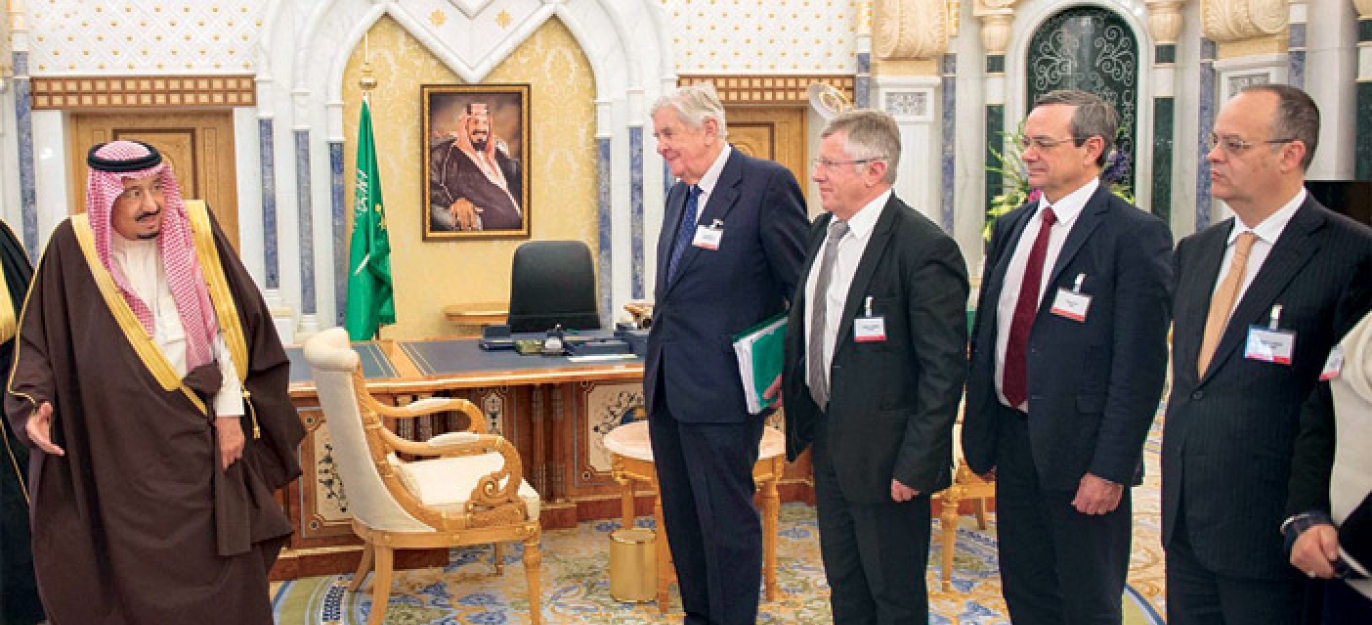
Brussels, 22 January 2016 - Deeply concerned about the threat posed by Daesh, Saudi Arabia remains very committed to countering terrorism in any form and sees Iran as the primary source of instability in the Middle East. These were the core messages Salman bin Abdulaziz Al Saud, the King of Saudi Arabia, senior representatives of the Gulf Cooperation Council and key Saudi government officials and politicians, delivered to a NATO Parliamentary Assembly delegation during its visit to the Kingdom from 18-20 January 2016.
There appears to be a widening gap between the reality of contemporary Saudi Arabia, which has changed substantially over the past decade and Western perceptions of the Kingdom, which are still conditioned by the involvement of some Saudi citizens in the September 11 attacks. Western diplomats who met with the delegation are convinced that the Saudi government is very dedicated to fighting terrorism. It has decisively blocked funds intended for terrorist groups like Al Qaeda and Daesh and has recently put together a coalition of 34 largely Islamic countries to ensure a united front in this struggle. Among many other measures, it has enacted the strictest and most effective financial rules making it very difficult to fund terrorism from the Kingdom.
Every Saudi official who met with the delegation expressed Saudi Arabia’s deep concerns about Iran. The country’s leaders feel that Iran remains a revolutionary power dedicated to overthrowing the regional order. Iran has exploited what the Saudis openly describe as growing U.S. and European reluctance to project power in the region and is actively working to destabilize Bahrain, Lebanon, Syria, Iraq, and Yemen either directly with its own forces or through proxies like Hezbollah. Saudi officials support the efforts in Vienna to find a political solution for Syria and feel that Iranian and Russian military support for the Assad regime are making it very difficult to end the conflict. Saudi officials are concerned that the recent nuclear deal will not deter Iran from developing its nuclear capacities and will only embolden Tehran to meddle in the affairs of its neighbors.
On the economic front, the delegation learned that Saudi Arabia is committed to diversifying its economy so that is becomes less reliant on oil revenues which swing wildly with price fluctuations. Every year 300,000 Saudis enter the job market and neither the state nor the oil sector is positioned to provide employment to these young people. The country’s leaders thus recognize that a more diversified economic base will be essential to maintaining prosperity and stability over the long run. Hundreds of thousands of young Saudis are now studying abroad to acquire the skills and the linkages needed to achieve this goal.
Women’s role in Saudi society is changing more rapidly than is often understood in the West. In meetings at the Majlis Ash-Shura, the delegation met with some of the 30 women recently named to this consultative Assembly. They communicated to the delegation that women are playing a growing role in Saudi politics and economics and are now pushing for reforms to better reflect this evolving reality.
Lord Jopling, Chairman of the Sub-Committee on Democratic Governance and French MP Gilbert Le Bris, Chairman of the Mediterranean and Middle East Special Group, led the NATO PA delegation, which consisted of 23 parliamentarians from 13 NATO countries.
No related articles