News
Assembly Calls for Stronger Democratic Resilience in face of Foreign Interference
12 October 2025
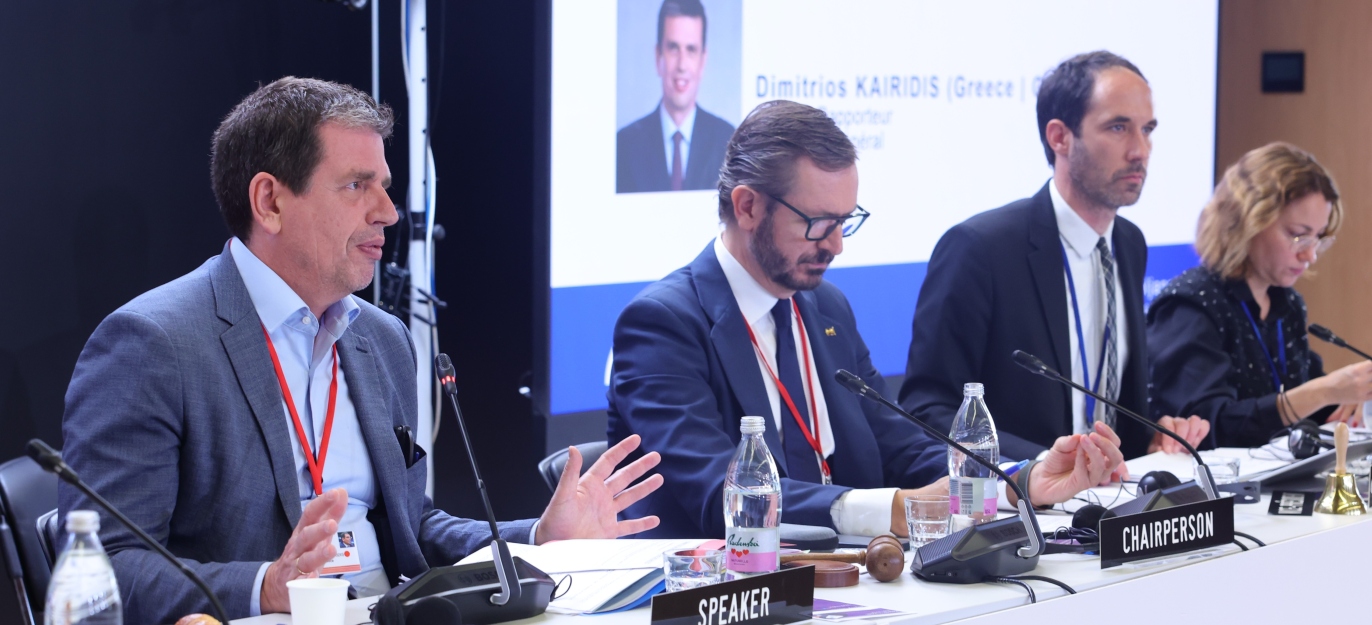
LJUBLJANA – Allied nations must bolster the democratic resilience of their societies in the face of interference from hostile foreign powers, the NATO Parliamentary Assembly warned Sunday.
“Foreign interference aims to threaten the stability, cohesion and democratic functioning of Allied societies,” said a resolution prepared by Greek lawmaker Dimitrios Kairidis for the NATO PA’s Committee on Democracy and Security (CDS). “Euro-Atlantic deterrence and defence are intrinsically linked to democratic resilience.”
The resolution noted that malign actors – including Russia, China, Iran and North Korea – are working more closely together and “increasingly resorting to similar hybrid tactics, including disinformation, cyberattacks, and election interference, to manipulate public debate and erode democratic institutions in Allied nations.”
Slovenia is hosting the Assembly’s annual session, where 245 parliamentarians will review the steps taken since the Hague Summit.
Kairidis’ resolution urged Allies to treat foreign interference as a strategic threat, dedicate more resources to strengthen resilience, adopt whole-of-society approaches and deepen partnerships. It also called for meaningful sanctions and diplomatic consequences against perpetrators.
A supporting CDS report examined how cyberattacks by hostile actors seek to undermine election processes, erode trust in democratic institutions, and fuel political instability.
“Elections, the very embodiment of the people’s will and the cornerstone of democracy, now increasingly rely on information and communication technologies. Yet, with the undeniable strides in technological advancement come new vulnerabilities, that can be exploited by malicious actors,” Kairidis stressed.
In a separate resolution for the Science and Technology Committee (STC), Luxembourg lawmaker Sven Clement urged NATO to take a lead in the development of drone systems to ensure its technological edge and military advantage. He highlighted the clear cost asymmetry between attack drones and interceptors, which poses unique challenges for the Alliance due to the growing threat from Russian UAVs to Allied airspace and sovereignty.
Clement called on Allies to strengthen innovation, integration, and cooperation while ensuring interoperability, civilian oversight, and complementarity with crewed forces.
These recommendations were echoed in a supporting STC report, underscoring the role of uncrewed systems in NATO’s growing focus on multi-domain operations and considering the importance of cyber and space domains for such systems.
“Uncrewed systems provide ample opportunities to armed forces on the ground and allow actors that lack more traditional crewed systems and high-end capabilities to inflict damage on conventionally more superior opponents,” Clement added.
Geopolitical competition is also intensifying in the Arctic and space domains.
Melting Arctic ice has opened new sea lanes and access to untapped resources, while Russia has expanded its military presence and further asserted sovereignty in the region since its invasion of Ukraine.
A report prepared by Icelandic legislator Njall Trausti Fridbertsson and adopted by the STC urged better situational awareness, greater technological investment, and coordinated Allied strategy for the Arctic.
“The aim is to ensure the Alliance is not only prepared for emerging threats but also positioned to shape the future of Arctic security in a way that protects its values, interests, and the international rule of law,” the report stressed.
In another STC report, Slovenian lawmaker Zan Mahnic emphasised the critical role of space infrastructure for Allied societies and the mounting threats to its security.
“Not only has the number of actors increased, but their relationships are increasingly characterised by strategic competition. Existing mechanisms are no longer sufficient to effectively govern space, and an increasing number of actors are readying themselves for military activities in space,” Mahnic stressed.
The report recommended recognising space assets as critical infrastructure, fostering public-private cooperation across the Alliance, enhancing space capabilities, strengthening partnerships, and advancing legal frameworks and governance mechanisms.
The Assembly also marked the 25th anniversary of United Nations Security Council Resolution 1325 and the related Agenda on the role of Women in Peace and Security (WPS), underlining that they remain a cornerstone of security and democratic resilience.
In a report to the Committee on Democracy and Security (CDS), Turkish lawmaker Süreyya Önes Derici stressed that the implementation of the WPS agenda must remain a NATO priority despite a growing backslash against gender equality and shrinking national budgets.
“The WPS agenda helps Allies fulfil their national security priorities while delivering on NATO’s core tasks. In deterrence and defence, WPS can play a role in creating a strategic advantage over potential adversaries,” the lawmaker highlighted.
The report recommended reframing WPS as a strategic security objective, securing funding, improving monitoring and evaluation, and fostering broader societal change to advance gender equality.
The Assembly, though institutionally separate from NATO, serves as an essential link between NATO and the parliaments of the NATO nations. It provides greater transparency of NATO policies and fosters better understanding of the Alliance’s objectives and missions among legislators and citizens of the Alliance. Throughout 2025, the Assembly celebrates 70 years of parliamentary diplomacy.
Press queries: [email protected]
Photos © NATO PA | ©National Assembly - Matija Sušnik


Related documents
-
2025 - RENAVIGATING THE UNFROZEN ARCTIC
2025 - RENAVIGATING THE UNFROZEN ARCTIC
Njall Trausti FRIDBERTSSON (Iceland) - GENERAL REPORT
This report was adopted by the Science and Technology Committee at the 71st Annual Session held in Ljubljana, Slovenia. The Arctic is undergoing rapid transformation. Rising temperatures, melting ice and…
Committee Reports -
2025 - WOMEN, PEACE AND SECURITY: UNITED NATIONS SECURITY COUNCIL RESOLUTION 1325 AT 25
2025 - WOMEN, PEACE AND SECURITY: UNITED NATIONS SECURITY COUNCIL RESOLUTION 1325 AT 25
Süreyya ÖNES DERICI (Türkiye) - SPECIAL REPORT
This report was adopted by the Committee on Democracy and Security at the 71st Annual Session held in Ljubljana, Slovenia. Twenty-five years ago, the United Nations Security Council adopted Resolution 1325.…
Rapports de commission -
2025 - MASTERING THE FUTURE OF UNCREWED WARFARE
2025 - MASTERING THE FUTURE OF UNCREWED WARFARE
Acting Rapporteur: Sven CLEMENT (Luxembourg) - REPORT
This report was adopted by the Science and Technology Committee at the 71st Annual Session held in Ljubljana, Slovenia. Battlefield tactics are rapidly evolving with increased deployment of uncrewed systems…
Committee Reports -
2025 - SPACE: THE FIFTH OPERATIONAL DOMAIN
2025 - SPACE: THE FIFTH OPERATIONAL DOMAIN
Zan MAHNIC (Slovenia) - SPECIAL REPORT
This report was adopted by the Science and Technology Committee at the 71st Annual Session held in Ljubljana, Slovenia. NATO has and continues to guarantee freedom, peace and prosperity in the Euro-…
Committee Reports -
2025 - DEMOCRACY UNDER DIGITAL THREAT: BOLSTERING THE CYBERSECURITY OF ALLIED ELECTIONS
2025 - DEMOCRACY UNDER DIGITAL THREAT: BOLSTERING THE CYBERSECURITY OF ALLIED ELECTIONS
Dimitrios KAIRIDIS (Greece) – GENERAL REPORT
This report was adopted by the committee on democracy and security at the 71st Annual Session held in Ljubljana, Slovenia. Democracy is at risk when electoral processes and the actors that underpin them −…
Committee Reports -
RESOLUTION 495 - HARNESSING OPPORTUNITIES OF THE RESPONSIBLE USE OF AI IN THE MILITARY DOMAIN
RESOLUTION 495 - HARNESSING OPPORTUNITIES OF THE RESPONSIBLE USE OF AI IN THE MILITARY DOMAIN
Presented by the Science and Technology Committee and adopted by the Plenary Assembly at the 70th Annual Session of the NATO Parliamentary Assembly held in Montréal, Canada, on Monday 25 November 2024
Policy Recommendations -
2024 - NATO AND ARTIFICIAL INTELLIGENCE: NAVIGATING THE CHALLENGES AND OPPORTUNITIES
2024 - NATO AND ARTIFICIAL INTELLIGENCE: NAVIGATING THE CHALLENGES AND OPPORTUNITIES
SVEN CLEMENT (Luxembourg) - SPECIAL REPORT
Artificial Intelligence (AI) is set to rapidly change how people live and work, but also the ways in which wars will be fought. Experts believe that the integration of AI into military systems has the potential to revolutionise warfare. The potential use cases of AI in the military are far-…
Committee Reports -
2024 - CHINA’S CHALLENGE TO NATO’S TECHNOLOGICAL EDGE: THE ROLE OF SEMICONDUCTORS
2024 - CHINA’S CHALLENGE TO NATO’S TECHNOLOGICAL EDGE: THE ROLE OF SEMICONDUCTORS
NJALL TRAUSTI FRIDBERTSSON (Iceland) - GENERAL REPORT
As the Alliance is celebrating its 75th anniversary, it finds itself in a world characterised by geopolitical and strategic competition. Emerging disruptive technologies (EDT), such as artificial intelligence, quantum technologies and robotics and autonomous systems…
Committee Reports -
RESOLUTION 488 - ENHANCING THE PROTECTION OF ALLIED CRITICAL MARITIME INFRASTRUCTURE
RESOLUTION 488 - ENHANCING THE PROTECTION OF ALLIED CRITICAL MARITIME INFRASTRUCTURE
Presented by the Science and Technology Committee and adopted by the Plenary Assembly on Monday 9 October 2023 in Copenhagen, Denmark
Policy Recommendations -
2023 - GENERAL REPORT - PROTECTING CRITICAL MARITIME INFRASTRUCTURE – THE ROLE OF TECHNOLOGY
2023 - GENERAL REPORT - PROTECTING CRITICAL MARITIME INFRASTRUCTURE – THE ROLE OF TECHNOLOGY
Njall Trausti FRIDBERTSSON (Iceland)
Critical infrastructure in the maritime domain facilitates the continuous delivery of basic services such as energy and communication, particularly the internet. The importance of these networks has dramatically increased in recent years, yet the responsibilities for…
Committee Reports -
2023 - SPECIAL REPORT - NOVEL MATERIALS AND ADDITIVE MANUFACTURING
2023 - SPECIAL REPORT - NOVEL MATERIALS AND ADDITIVE MANUFACTURING
Sven CLEMENT (Luxembourg)
Novel Materials are essential for the progress of science and technology, and their continued research and development is vital to meeting current and future challenges facing NATO nations. Additive Manufacturing (3D printing) facilitates more rapid integration of new…
Committee Reports -
2022 - GENERAL REPORT - STRENGTHENING ALLIANCE S&T RESILIENCE
2022 - GENERAL REPORT - STRENGTHENING ALLIANCE S&T RESILIENCE
Sven CLEMENT (Luxembourg)
Since the inception of the Alliance, the ability to innovate has been key to NATO’s deterrence and defence. Now more than ever, maintaining its technological edge and upholding a competitive pace in Research and Development (R&D) will be instrumental for NATO to…
Committee Reports -
2022 - REPORT - TECHNOLOGICAL INNOVATION FOR FUTURE WARFARE
2022 - REPORT - TECHNOLOGICAL INNOVATION FOR FUTURE WARFARE
Njall Trausti FRIDBERTSSON (Iceland)
The future is fraught with uncertainties and envisioning the future of warfare is a difficult task, particularly as warfare is shaped by geopolitical, societal, technological, economic, environmental and military trends. Too many analyses focus on the issues of today…
Committee Reports -
2022 - SPECIAL REPORT - CLIMATE CHANGE MITIGATION AND ADAPTATION: THE ROLE OF TECHNOLOGY
2022 - SPECIAL REPORT - CLIMATE CHANGE MITIGATION AND ADAPTATION: THE ROLE OF TECHNOLOGY
Sven CLEMENT (Luxembourg)
Russia’s unprovoked invasion of Ukraine has completely overshadowed the sixth assessment report (AR 6) of the Intergovernmental Panel on Climate Change (IPCC), published shortly after the beginning of the war. However, the IPCC’s message is clear: climate change is at…
Committee Reports -
2021 - REPORT - BIOLOGICAL THREATS: TECHNOLOGICAL PROGRESS AND THE SPECTRE OF BIOTERRORISM IN THE POST-COVID-19 ERA
2021 - REPORT - BIOLOGICAL THREATS: TECHNOLOGICAL PROGRESS AND THE SPECTRE OF BIOTERRORISM IN THE POST-COVID-19 ERA
Sven CLEMENT (Luxembourg)
This report was adopted by the Science and Technology Committee at the Annual Session of the NATO Parliamentary Assembly in Lisbon. The ongoing COVID-19 pandemic has exposed global vulnerabilities to biological threats and…
Committee Reports
SEE More