News
Joint Visit to Moldova Brings NATO Legislators Face-to-Face with the Significant Challenges Confronting the Eastern Flank Partner
08 April 2025
For years Moldova has stood at the fault line in Europe’s standoff with Russia. The country’s complicated recent history includes long periods of Russian occupation, and its post-USSR collapse and independence declaration was marred by civil conflict, which resulted in the small strip of the country east of the Dniester River declaring a breakaway Transnistrian proto state, with a contingent of Russian forces remaining in place until today. The security of Moldova has been challenged ever since with a push and pull of public opinion oscillating between East and West, and the majority preferring to find stability under a declaration of neutrality.
Still, Moldovans have steadily been engaging in reforms based on a 2014 EU-Moldova Association Agreement and, after being granted EU candidate status in 2022, the possibility of future prosperity inside the EU common market looks like a closer-term reality. The results of the 2024 presidential elections and the referendum on enshrining EU accession in the Moldovan constitution were vital recent steps forward for Moldova’s European ambitions. The key test, however, lies in the upcoming 2025 parliamentary elections, where Moldova’s pro-European path could be consolidated.
To thwart these ambitions, Russia has been waging an intense hybrid war against Moldova since 2022. The lines of attack involve spreading disinformation, buying influence and votes, corruption, cyberattacks, acts of sabotage, and economic as well as energy blackmail. Russian hybrid attacks aim to sow discord in Moldovan society and scare people from supporting Moldova’s European ambitions.
Despite their limited resources and institutional capacity, the Moldovan authorities are, however, pushing back on multiple fronts. In a bold political step forward, Moldova’s newly elaborated 2023 National Security Strategy goes so far as to define Russia as the nation’s principal threat – a statement unimaginable a decade ago. The intensity of the campaigns and the pressures from being a state bordering Ukraine drove NATO to work immediately to increase its assistance to the country via a tailored defence capacity building programme.
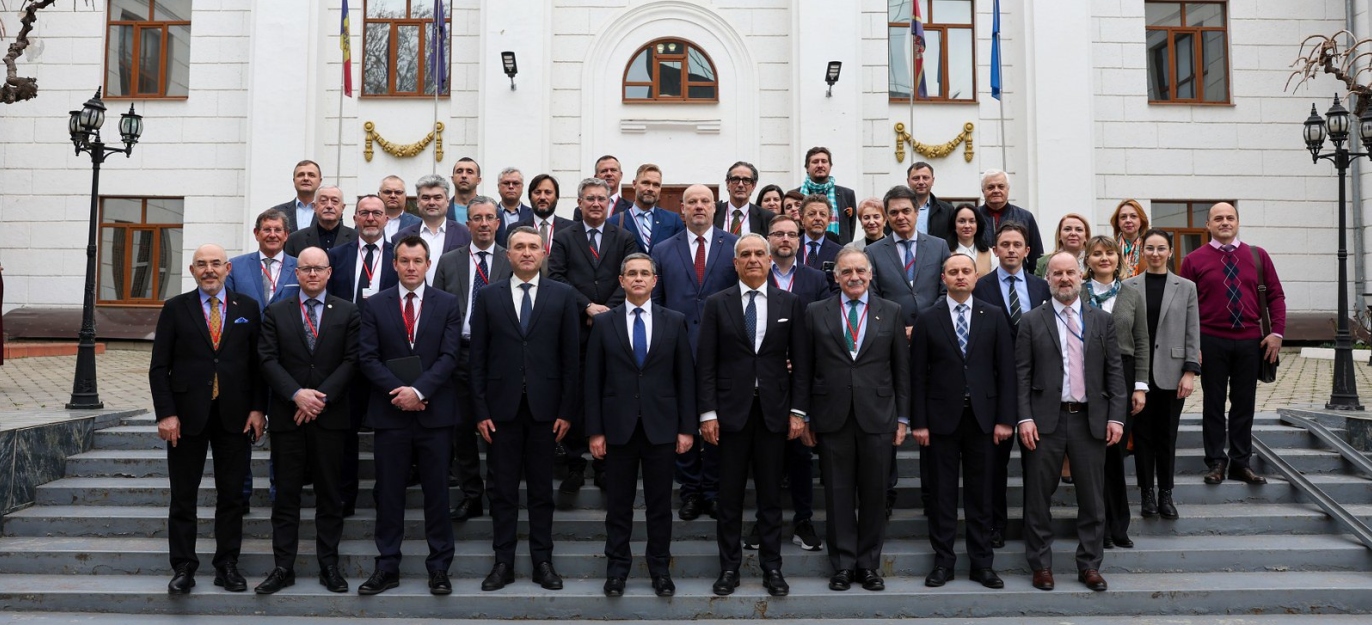
Against this backdrop, on 24-25 March 2025, the NATO Parliamentary Assembly organised its first joint Committee visit to Moldova since 2015. In Chișinău, the delegation from the Assembly’s Sub-Committee on Transatlantic Defence and Security Cooperation (DSCTC) and the Sub-Committee on Transition and Development (ESCTD) met with the members of the Committee on National Security of the Parliament of Moldova, the President of Moldova, the Deputy Prime Minister and Minister of Foreign Affairs, the Deputy Prime Minister and Minister for Reintegration as well as the Ministers of Energy and Defence.
Nicola Carè (Italy), Chairman of the DSCTC, led the delegation alongside Tamas Harangozo (Hungary), Chairman of the ESCTD. The delegation consisted of 28 MPs from 13 Allied countries.
Regional Security and Russia’s War against Ukraine
Russia’s war of aggression against Ukraine continues to have a major destabilising effect on Moldova. Russian missiles and drones enter Moldova’s airspace regularly. The most recent incident being on 13 February 2025, when two Russian drones crashed on Moldovan territory. The event once again highlighted the risks posed to neighbouring countries amid Russian aggression in the region.
Russia also maintains significant leverage over Moldova through the highly militarised breakaway region of Transnistria, where it keeps around 1,500 Russian troops. When added to Transnistria’s 5,000 standing forces, with nearly 15,000 in reserve forces, Russia undoubtedly holds the balance of military power in the country. Despite the long-standing stalemate over the region’s political future, Moldova maintains a ministry working to have policies for the eventual reintegration of Transnistria. The active mechanism for settlement talks, the 5+2 format, which includes Moldova, Transnistria, the OSCE, Russia, Ukraine, the European Union and the United States, was, however, suspended after Russia’s full-scale invasion of Ukraine. Deputy Prime Minister for Reintegration Oleg Serebrian told the delegation this would remain the case until a peace settlement in Ukraine is reached. After this, he stressed, Moldovan authorities will concentrate on force demobilisation in Transnistria and on Transnistria’s economic reintegration into Moldova. He noted that the region’s economic transition is already under way, as the region is already sending up to 70% of its exports to the EU, and will soon be more closely linked into a western-dependent energy grid.
More broadly, however, Russia’s war of aggression against Ukraine impacts Moldova’s stability and economic development. As stressed by the Deputy Prime Minister and Minister of Foreign Affairs, Mihai Popșoi, the war has been a significant drag on investments across the region, with foreign and domestic investment in Moldova being particularly impacted.
Despite the continued Russian pressure, Moldovan authorities have clearly indicated their intent to continue aligning with Western sanctions against Russia, some of which impact Transnistrian businesses. Moreover, as noted by the Chair of the Committee on National Security and Head of the Delegation of Moldova to the NATO Parliamentary Assembly Lilian Carp, Moldova will continue to support Ukrainian refugees, including by granting them access to education and medical care. In fact, since 2022 over 1 million Ukrainian refugees transited over Moldovan territory; over 200,000 of them decided to stay in Moldova. This is the most per capita of any country and, as Carp noted, weighed heavily on a resource-poor country, but, he continued, “we are happy to do this, because it is the right thing to do.”
Russia’s Hybrid War
While Russia wages a kinetic war against Ukraine, it is also waging an intense hybrid war against Moldova. Russia has ramped up a range of grey zone attacks against Moldova since 2022, especially after Chișinău moved decisively to cut ties with Moscow. Russia’s grey zone tactics against Moldova are characterised by their intensity, scale and scope. The ultimate objective of the effort is to remove the reformist government in Chișinău and prevent Moldova from moving closer to the West. In fact, Russia believes that Moldova’s vulnerabilities, if manipulated properly, will constitute a sufficient obstacle to the country’s European integration.
Moldova is vulnerable to Russia’s grey zone campaign. Firstly, Moldova faces challenges to societal resilience where a sizeable part of the population still supports Russia and opposes closer political ties with the West. Second, Moldova’s state institutions suffer from a deficit of financing and personnel. This allows Russia to exhaust the response capacity of Moldovan government institutions and agencies more easily. Thirdly, Russia continues to fuel secessionist tendencies in Gagauzia and Transnistria, which further complicates Moldova’s position.
President of Moldova Maia Sandu told the delegation that, in recent months, electoral interference became the primary weapon in Russia’s hybrid warfare toolbox against Moldova. President Sandu noted that the scale and the level of sophistication of Russian electoral interference were without precedent. According to Moldovan assessments, Russia used up to 200 million EUR to impact the outcome of the 2024 presidential elections as well as the referendum on enshrining EU accession in the Moldovan constitution.
Russia has also orchestrated a large-scale vote-buying, including by using a network of activists and bots. Russia went so far as to fly Moldovans living in Russia back home to vote and gave them cash to buy votes on the ground when there. At several polling stations in Western countries, voting was disrupted by false bomb threats, and numerous Moldovan journalists and public figures were threatened before elections.
This electoral interference was coupled with mounting disinformation attacks from Russia, which shifted to social media (e.g., Telegram, TikTok) after the government suspended several Russia-backed television channels in 2022. Russian disinformation campaigns have been centred around several key themes. They involve attacks on the democratic credentials of the government, the legitimacy of state institutions, and accusations that the government is pushing a foreign agenda. Russia has been also spinning the narrative that Moldova’s pro-Western governments will drag the country into an undesirable war. Against the backdrop of Russia’s war of aggression against Ukraine, this threat of war amplified fears in society and aimed to scare off pro-European voters.
The Moldovan authorities underlined that they are implementing lessons learned from the Russian intensified hybrid warfare campaign to increase Moldova’s resilience before the parliamentary elections, which are scheduled to take place in the second half of 2025. Moldova’s recent actions include legislative steps to minimise the manipulation of the electoral process, increased dialogue with social media companies, and boosting capabilities to counter disinformation, including through the newly established Centre for Strategic Communications and Combating Disinformation.
Energy Security
Until 2022, Moldova was one of Europe’s most dependent countries on Russian energy. Russian gas was delivered through Ukraine via Transnistria. Since 2022, Moldova has taken concrete steps to reshape its energy security landscape to minimise its exposure to Russian energy blackmail. In fact, Moldova managed to achieve full independence from Russian gas and unbundle its energy market to comply with the EU’s Third Energy Package, which aims at creating integrated and competitive energy markets for natural gas and electricity.
Until the beginning of 2025, however, 80% of Moldova’s electricity demand was supplied from a gas-fired power plant located in Transnistria which, in turn, was supplied with gas free-of-charge by Russia. On 1 January 2025, Gazprom ceased its gas supplies to Transnistria following Ukraine’s decision not to extend the gas transit agreement. The halt in gas supplies triggered a severe crisis in Transnistria, leading to extended blackouts and heating disruptions for its approximately 450,000 residents and a significant increase in electricity prices in Moldova. The crisis was temporarily resolved in January 2025 with the approval of EUR 64 million in non-repayable aid by the European Commission to provide immediate relief and support Moldova's energy independence and resilience.
The Moldovan authorities underlined that this crisis led them to speed up certain projects to increase diversification of electricity supply. Minister of Energy Dorin Junghietu underlined that Moldova’s goal is interconnection with the European market which will increase the security of supply. In this context, the construction of a high-voltage power line Bălți-Suceava remains a priority. The line is the second of three 400 kV power lines to be built to strengthen interconnection with the European continental energy system of the European Network of Transmission System Operators for Electricity (ENTSO-E). Mr. Junghietu confirmed that the Moldovan government plans to diversify the energy mix with more renewable energy by supporting large renewable energy projects. The target is to raise the share of renewable energy sources in electricity consumption from around 20% in 2024 to 30% by 2030. As such, Moldova authorised a total of 105 MW of wind farm projects and 60 MW of solar parks by the end of 2025.
Defence Policy and NATO-Moldova Cooperation
A core message resonating throughout the visit was straightforward: despite its neutrality, Moldova needs to invest more in defence. The country’s vulnerability and proximity to conflict are impossible to ignore and these factors are driving a push to enhance its capabilities. Minister of Defence Anatolie Nosatîi noted that Moldova will increase its defence budget to 1% of GDP by 2030. The budget increase will be primarily spent of equipment renovation as well as training and exercises.
In parallel, the Moldovan Armed Forces will remain dependent on donations coming from NATO Allies and the EU Members States. In 2024, Moldova celebrated 30 years as a member of NATO’s Partnership for Peace programme. In the last decade, it has been the focus of significant ‘tailored’ defence capacity building cooperation with NATO Allies. In addition to working with Allies to cooperate on Moldova’s defence institutional modernisation and resilience, Moldova has worked to be a security exporter as well, contributing to NATO’s KFOR for the last decade.
Based on the lessons learned from the war in Ukraine, the Moldovan authorities primarily underlined the need to increase Moldova’s radar and short-range air defence capabilities. Drone and counter-drone trainings are also high on the priority list. Moldova plans to continue to strengthen its practical cooperation with NATO to increase the interoperability of its Armed Forces. At the same time, Moldovan society support for NATO remains relatively low and oscillates around 25-38%.
Minister Nosatîi told the delegation he viewed the NATO PA’s visit as a strategic message – Moldova will continue to work hard to adapt, strengthen, and modernise all its institutions, particularly its defence capabilities.
The visit was capped with an engaging, and mutually beneficial, discussion with members of Moldova’s civil society to discuss the nature of the visit, and NATO-Moldova security and defence cooperation.
Photos of the visit, courtesy of ©Ministerul Apărării al Republicii Moldova, © National Assembly of the Republic of Serbia, © Pedja Vuckovic.


Related documents
-
2025 - DSC MEETING SUMMARY - ANNUAL SESSION LJUBLJANA
2025 - DSC MEETING SUMMARY - ANNUAL SESSION LJUBLJANA
Meeting Summaries -
2025 - ESC MEETING SUMMARY - ANNUAL SESSION LJUBLJANA
2025 - ESC MEETING SUMMARY - ANNUAL SESSION LJUBLJANA
Meeting Summaries -
2025 - NATO PA POLICY RECOMMENDATIONS
2025 - NATO PA POLICY RECOMMENDATIONS
All declarations and resolutions adopted by the NATO Parliamentary Assembly throughout 2025
Policy Recommendations -
2025 - RESOLUTION 500 - STRENGTHENING TRANSATLANTIC ECONOMIC PARTNERSHIP AND SECURITY AFTER THE NATO SUMMIT IN THE HAGUE
2025 - RESOLUTION 500 - STRENGTHENING TRANSATLANTIC ECONOMIC PARTNERSHIP AND SECURITY AFTER THE NATO SUMMIT IN THE HAGUE
presented by the Economics and Security Committee and adopted by the Plenary Assembly at the 71st Annual Session of the NATO Parliamentary Assembly held in Ljubljana, Slovenia, on Monday 13 October 2025
Policy Recommendations -
2025 - RESOLUTION 499 - MEETING THE MOMENT: NATO’S DETERRENCE AND DEFENCE IMPERATIVES AFTER THE HAGUE SUMMIT
2025 - RESOLUTION 499 - MEETING THE MOMENT: NATO’S DETERRENCE AND DEFENCE IMPERATIVES AFTER THE HAGUE SUMMIT
Presented by the Defence and Security Committee and adopted by the Plenary Assembly at the 71st Annual Session of the NATO Parliamentary Assembly held in Ljubljana, Slovenia, on Monday 13 October 2025
Policy Recommendations -
2025 - RUSSIA’S AXIS OF ENABLEMENT IN ITS WAR ON UKRAINE
2025 - RUSSIA’S AXIS OF ENABLEMENT IN ITS WAR ON UKRAINE
Rick LARSEN (United States) - REPORT
This report was adopted by the Defence and Security Committee at the 71st Annual Session held in Ljubljana, Slovenia. Russia’s enablers – i.e. the Axis of Upheaval or Quartet of Chaos – are now essential to…
Committee Reports -
2025 - NATO'S FUTURE RUSSIA STRATEGY
2025 - NATO'S FUTURE RUSSIA STRATEGY
Rebecca PATTERSON (Canada)
This report was adopted by the Defence and Security Committee at the 71st Annual Session held in Ljubljana, Slovenia. NATO and Russia have seen a precipitous decline in relations since the days of advancing…
Committee Reports -
2025 - THE WAR IN UKRAINE AND MOUNTING ECONOMIC CHALLENGES IN THE GREATER BLACK SEA REGION
2025 - THE WAR IN UKRAINE AND MOUNTING ECONOMIC CHALLENGES IN THE GREATER BLACK SEA REGION
Tamas HARANGOZO (ad interim) (Hungary) - REPORT
This report was adopted by the Economics and Security Committee at the 71st Annual Session held in Ljubljana, Slovenia. Russia’s illegal invasion of Ukraine has transformed the Black Sea region into a…
Committee Reports -
2025 - GEO-ECONOMIC FRAGMENTATION: A CHALLENGE TO THE TRANSATLANTIC PARTNERSHIP
2025 - GEO-ECONOMIC FRAGMENTATION: A CHALLENGE TO THE TRANSATLANTIC PARTNERSHIP
Bart KROON (The Netherlands) - GENERAL REPORT
This report was adopted by the Economics and Security Committee at the 71st Annual Session held in Ljubljana, Slovenia. There are few economic and political observers who would argue that the international…
Committee Reports -
2025 - ALLIED COOPERATION IN THE INDO-PACIFIC
2025 - ALLIED COOPERATION IN THE INDO-PACIFIC
Spyridon KYRIAKIS (Greece) - REPORT
This report was adopted by the Defence and Security Committee at the 71st Annual Session held in Ljubljana, Slovenia. NATO’s interest in closer Indo-Pacific cooperation has intensified in recent years,…
Committee Reports -
2025 - COPING WITH CURRENT AND FUTURE THREATS: THE EVOLUTION OF NORTH AMERICAN AND EUROPEAN DEFENSE
2025 - COPING WITH CURRENT AND FUTURE THREATS: THE EVOLUTION OF NORTH AMERICAN AND EUROPEAN DEFENSE
Neal Patrick DUNN (United States) - REPORT
This report was adopted by the Economics and Security Committee at the 71st Annual Session held in Ljubljana, Slovenia. Russia’s full-scale invasion of Ukraine in 2022 has tested the resilience and…
Committee Reports -
2025 - DSC MEETING SUMMARY - SPRING SESSION DAYTON
2025 - DSC MEETING SUMMARY - SPRING SESSION DAYTON
Meeting Summaries -
2025 - MISSION REPORT - ESCTER VISIT TO THE UK - JUNE
2025 - MISSION REPORT - ESCTER VISIT TO THE UK - JUNE
Mission Reports -
2025 - ESC MEETING SUMMARY - SPRING SESSION DAYTON
2025 - ESC MEETING SUMMARY - SPRING SESSION DAYTON
Meeting Summaries -
2025 - MISSION REPORT - UNIC PCNP DSC VISIT TO GERMANY - APRIL
2025 - MISSION REPORT - UNIC PCNP DSC VISIT TO GERMANY - APRIL
Mission Reports -
2025 - MISSION REPORT - ESCTD DSCTC VISIT TO MOLDOVA - MARCH
2025 - MISSION REPORT - ESCTD DSCTC VISIT TO MOLDOVA - MARCH
Mission Reports -
2024 - ESC MEETING SUMMARY - ANNUAL SESSION MONTRÉAL
2024 - ESC MEETING SUMMARY - ANNUAL SESSION MONTRÉAL
Meeting Summaries -
2024 - DSC MEETING SUMMARY - ANNUAL SESSION MONTRÉAL
2024 - DSC MEETING SUMMARY - ANNUAL SESSION MONTRÉAL
Meeting Summaries -
RESOLUTION 493 - GALVANISING TECHNOLOGICAL ADVANCE TO SUPPORT ALLIED PROSPERITY AND SECURITY
RESOLUTION 493 - GALVANISING TECHNOLOGICAL ADVANCE TO SUPPORT ALLIED PROSPERITY AND SECURITY
Presented by the Economics and Security Committee and adopted by the Plenary Assembly at the 70th Annual Session of the NATO Parliamentary Assembly held in Montréal, Canada, on Monday 25 November 2024
Policy Recommendations -
RESOLUTION 492 - STRENGTHENING NATO’S INTEGRATED AIR AND MISSILE DEFENCE
RESOLUTION 492 - STRENGTHENING NATO’S INTEGRATED AIR AND MISSILE DEFENCE
Presented by the Defence and Security Committee and adopted by the Plenary Assembly at the 70th Annual Session of the NATO Parliamentary Assembly held in Montréal, Canada, on Monday 25 November 2024
Policy Recommendations -
2024 - WESTERN BALKANS: RENEWED SECURITY CHALLENGES ON NATO’S DOORSTEP
2024 - WESTERN BALKANS: RENEWED SECURITY CHALLENGES ON NATO’S DOORSTEP
LORD MARK LANCASTER (United Kingdom) - REPORT
2023 witnessed a significant return of violent confrontations in northern Kosovo. The incidents sounded an alarm bell to the international community about the seriousness of the persistent challenges in the Western Balkans. The absence of a pathway to the normalisation…
Committee Reports -
2024 - THE STATE OF RUSSIA’S WARTIME ECONOMY
2024 - THE STATE OF RUSSIA’S WARTIME ECONOMY
TAMAS HARANGOZO (Hungary) - REPORT
Russia’s war on Ukraine has had serious economic impacts with global consequences. International sanctions following the invasion of Ukraine initially led to a sharp decline in Russian export earnings which, in turn, precipitated a fall in the value of the ruble.…
Committee Reports -
2024 - NATO’S EVOLVING AIR AND MISSILE DEFENCE POSTURE
2024 - NATO’S EVOLVING AIR AND MISSILE DEFENCE POSTURE
UTKU CAKIROZER (Türkiye) - GENERAL REPORT
The threat from advanced missile systems combined with increasingly capable drones is on display with unsettling frequency across a growing number of conflicts in the Alliance’s near neighbourhood. Ominously, growing military cooperation among autocratic regimes in…
Committee Reports -
2024 - BUILDING A VALUES-BASED TRANSATLANTIC ECONOMIC AND STRATEGIC PARTNERSHIP WITH THE INDO-PACIFIC
2024 - BUILDING A VALUES-BASED TRANSATLANTIC ECONOMIC AND STRATEGIC PARTNERSHIP WITH THE INDO-PACIFIC
NEAL PATRICK DUNN (United States) - REPORT
After more than two decades of robust economic growth, the Chinese economy is entering a phase of slower growth. Mounting debt, an asset bubble exacerbated by poor governance, excessive savings due, in part, to an inadequate social safety net, collapsing consumer…
Committee Reports -
2024 - RUSSIA’S WAR AND ALLIED SUPPORT FOR UKRAINE
2024 - RUSSIA’S WAR AND ALLIED SUPPORT FOR UKRAINE
RICK LARSEN (United States) - REPORT
Western military leaders and experts alike are issuing dire warnings to Ukraine’s supporters: the failure to step up now and supply Ukrainian forces with the ammunition and weapon systems they need could result in the collapse of Ukraine’s defensive lines (Cavoli, 2024…
Committee Reports -
2024 - CRITICAL DUAL-USE TECHNOLOGIES: COMMERCIAL, REGULATORY, SOCIETAL, AND NATIONAL SECURITY CHALLENGES
2024 - CRITICAL DUAL-USE TECHNOLOGIES: COMMERCIAL, REGULATORY, SOCIETAL, AND NATIONAL SECURITY CHALLENGES
HARRIETT BALDWIN (United Kingdom) - GENERAL REPORT
The defence industry long functioned as a critical engine of technological innovation and often “spun off” technologies it developed into the commercial realm. Today the reverse is increasingly the case. More and more, militaries depend on technologies developed…
Committee Reports -
2024 - MISSION REPORT - DSCFC STCTTS VISIT TO FRANCE - OCTOBER
2024 - MISSION REPORT - DSCFC STCTTS VISIT TO FRANCE - OCTOBER
Mission Reports -
2024 - MISSION REPORT - ESCTD ESCTER VISIT TO ESTONIA - OCTOBER
2024 - MISSION REPORT - ESCTD ESCTER VISIT TO ESTONIA - OCTOBER
Mission Reports -
2024 - MISSION REPORT - DSCTC VISIT TO NORWAY & SWEDEN - SEPTEMBER
2024 - MISSION REPORT - DSCTC VISIT TO NORWAY & SWEDEN - SEPTEMBER
Mission Reports -
2024 - MISSION REPORT - DSC VISIT TO THE US - SEPTEMBER
2024 - MISSION REPORT - DSC VISIT TO THE US - SEPTEMBER
Mission Reports -
2024 - DSC MEETING SUMMARY - SPRING SESSION SOFIA
2024 - DSC MEETING SUMMARY - SPRING SESSION SOFIA
Meeting Summaries -
2024 - ESC MEETING SUMMARY - SPRING SESSION SOFIA
2024 - ESC MEETING SUMMARY - SPRING SESSION SOFIA
Meeting Summaries -
2024 - MISSION REPORT - ESCTER PCTR VISIT TO THE UNITED STATES - APRIL
2024 - MISSION REPORT - ESCTER PCTR VISIT TO THE UNITED STATES - APRIL
Mission Reports -
2024 - MISSION REPORT - DSCTC VISIT TO THE WESTERN BALKANS - APRIL
2024 - MISSION REPORT - DSCTC VISIT TO THE WESTERN BALKANS - APRIL
Mission Reports -
2024 - MISSION REPORT - DSCFC VISIT TO THE UNITED STATES - MARCH
2024 - MISSION REPORT - DSCFC VISIT TO THE UNITED STATES - MARCH
Mission Reports -
2023 - DSC MEETING SUMMARY - ANNUAL SESSION COPENHAGEN
2023 - DSC MEETING SUMMARY - ANNUAL SESSION COPENHAGEN
Meeting Summaries -
2023 - MISSION REPORT - JOINT ESCTER PCNP VISIT TO AUSTRALIA - NOVEMBER
2023 - MISSION REPORT - JOINT ESCTER PCNP VISIT TO AUSTRALIA - NOVEMBER
Mission Reports -
2023 - MISSION REPORT - JOINT DSCFC GSM VISIT TO TURKIYE - NOVEMBER
2023 - MISSION REPORT - JOINT DSCFC GSM VISIT TO TURKIYE - NOVEMBER
Mission Reports -
2023 - ESC MEETING SUMMARY - ANNUAL SESSION COPENHAGEN
2023 - ESC MEETING SUMMARY - ANNUAL SESSION COPENHAGEN
Meeting Summaries -
RESOLUTION 486 - TOWARDS THE RECONSTRUCTION OF UKRAINE
RESOLUTION 486 - TOWARDS THE RECONSTRUCTION OF UKRAINE
Presented by the Economics and Security Committee and adopted by the Plenary Assembly on Monday 9 October 2023 in Copenhagen, Denmark
Policy Recommendations -
RESOLUTION 485 - STRENGTHENING STABILITY AND SECURITY IN THE BLACK SEA REGION
RESOLUTION 485 - STRENGTHENING STABILITY AND SECURITY IN THE BLACK SEA REGION
Presented by the Defence and Security Committee and adopted by the Plenary Assembly on Monday 9 October 2023 in Copenhagen, Denmark.
Policy Recommendations -
RESOLUTION 484 - IMPLEMENTING NATO’S NEW DETERRENCE AND DEFENCE BASELINE
RESOLUTION 484 - IMPLEMENTING NATO’S NEW DETERRENCE AND DEFENCE BASELINE
Presented by the Defence and Security Committee and adopted by the Plenary Assembly on Monday 9 October 2023 in Copenhagen, Denmark.
Policy Recommendations -
2023 - REPORT - REBUILDING TRANSATLANTIC ECONOMIC RELATIONS AND RESILIENCE
2023 - REPORT - REBUILDING TRANSATLANTIC ECONOMIC RELATIONS AND RESILIENCE
Faik OZTRAK (Türkiye)
Democratic societies today are on the cusp of partially retreating from what some analysts describe as an era of hyper-globalisation because of national security considerations but also because of its apparent consequences for communities marginalised by the logic of…
Committee Reports -
2023 - GENERAL REPORT - RUSSIA’S WAR ON UKRAINE AND TRANSATLANTIC ENERGY SECURITY CHALLENGES
2023 - GENERAL REPORT - RUSSIA’S WAR ON UKRAINE AND TRANSATLANTIC ENERGY SECURITY CHALLENGES
Harriett BALDWIN (United Kingdom)
Russia’s aggression against Ukraine and its willingness to deploy energy as a geopolitical weapon have destroyed its reliability as an energy supplier. A mass European exodus from Russian oil and gas markets has occurred. It is very unlikely that these energy markets…
Committee Reports -
2023 - SPECIAL REPORT - UKRAINE'S FIGHT FOR FREEDOM & ALLIED AND GLOBAL RESPONSE TO RUSSIA'S WAR
2023 - SPECIAL REPORT - UKRAINE'S FIGHT FOR FREEDOM & ALLIED AND GLOBAL RESPONSE TO RUSSIA'S WAR
Rick LARSEN (United States)
Russia’s war in Ukraine is the most violent and consequential war in Europe since the end of World War II. Its outcome will likely determine the shape of great power competition for the remainder of the 21st century. This special…
Committee Reports -
2023 - REPORT - TOWARDS THE RECONSTRUCTION OF UKRAINE
2023 - REPORT - TOWARDS THE RECONSTRUCTION OF UKRAINE
Michal SZCZERBA (Poland)
Ukraine’s reconstruction will not simply be essential for Ukraine. It will, in fact, be critical to reinforcing Europe’s security architecture and its democratic way of life. Indeed, European peace, security and economic vitality ultimately…
Committee Reports -
2023 - REPORT - SEA CHANGE: THE RAPID EVOLUTION OF BALTIC SECURITY AFTER RUSSIA’S INVASION OF UKRAINE
2023 - REPORT - SEA CHANGE: THE RAPID EVOLUTION OF BALTIC SECURITY AFTER RUSSIA’S INVASION OF UKRAINE
Jeroen VAN WIJNGAARDEN (Netherlands)
Russia’s invasion of Ukraine unleashed the most violent and consequential conventional war on the European continent since World War II. The war sent immediate shockwaves that continue to resonate along the Alliance’s eastern flank, from the High North down to the…
Committee Reports -
2023 - REPORT - TROUBLED WATERS – HOW RUSSIA’S WAR IN UKRAINE CHANGES BLACK SEA SECURITY
2023 - REPORT - TROUBLED WATERS – HOW RUSSIA’S WAR IN UKRAINE CHANGES BLACK SEA SECURITY
Lord Mark LANCASTER (United Kingdom)
The Black Sea region (BSR) is a strategic fault line between the NATO Alliance and Russia. Except for Türkiye, the region came into the post-Cold War era profoundly unsettled about the strategic direction of its littoral states. The region’s east-west split resulted in…
Committee Reports -
2023 - GENERAL REPORT - ENSURING AN ALLIED DEFENCE INDUSTRIAL BASE FOR NATO’S NEW DETERRENCE AND DEFENCE BASELINE
2023 - GENERAL REPORT - ENSURING AN ALLIED DEFENCE INDUSTRIAL BASE FOR NATO’S NEW DETERRENCE AND DEFENCE BASELINE
Utku CAKIROZER (Türkiye)
In the wake of Russia’s illegal and unprovoked invasion, NATO Allies have surged aid to Ukraine – pouring in all forms of vital assistance, including military, economic, humanitarian, political and diplomatic believing that Ukraine’s self-defence is legitimate and its…
Committee Reports -
2023 - MISSION REPORT - JOINT DSCTC PCNP VISIT TO FINLAND - SEPTEMBER
2023 - MISSION REPORT - JOINT DSCTC PCNP VISIT TO FINLAND - SEPTEMBER
Mission Reports -
2023 - ESC MEETING SUMMARY - SPRING SESSION LUXEMBOURG
2023 - ESC MEETING SUMMARY - SPRING SESSION LUXEMBOURG
Meeting Summaries -
2023 - DSC MEETING SUMMARY - SPRING SESSION LUXEMBOURG
2023 - DSC MEETING SUMMARY - SPRING SESSION LUXEMBOURG
Meeting Summaries -
2023 - MISSION REPORT - JOINT STCTTS ESCTER VISIT TO THE UNITED STATES - JUNE
2023 - MISSION REPORT - JOINT STCTTS ESCTER VISIT TO THE UNITED STATES - JUNE
Mission Reports -
2023 - MISSION REPORT - JOINT DSCTC PCTR VISIT TO CANADA - APRIL
2023 - MISSION REPORT - JOINT DSCTC PCTR VISIT TO CANADA - APRIL
Mission Reports -
2023 - MISSION REPORT - JOINT ESCTD PCTR VISIT TO POLAND - MARCH
2023 - MISSION REPORT - JOINT ESCTD PCTR VISIT TO POLAND - MARCH
Mission Reports -
2023 - MISSION REPORT - DSC VISIT TO THE UNITED STATES - MARCH
2023 - MISSION REPORT - DSC VISIT TO THE UNITED STATES - MARCH
Mission Reports -
2023 - MISSION REPORT - DSCFC VISIT TO THE UNITED KINGDOM - JANUARY
2023 - MISSION REPORT - DSCFC VISIT TO THE UNITED KINGDOM - JANUARY
Mission Reports -
2022 - ESC COMMITTEE MEETING SUMMARY - ANNUAL SESSION MADRID
2022 - ESC COMMITTEE MEETING SUMMARY - ANNUAL SESSION MADRID
Meeting Summaries -
2022 - REPORT - THE OFFENCE-DEFENCE BALANCE: NATO’S GROWING CYBER CHALLENGE
2022 - REPORT - THE OFFENCE-DEFENCE BALANCE: NATO’S GROWING CYBER CHALLENGE
Andreas LOVERDOS (Greece)
The rise of cyber operations - both below and above the threshold of war - raises significant questions about the future of Allied security, and of warfare more broadly. As NATO’s new Strategic Concept states: “Cyberspace is contested at all times.” The cyber challenge…
Committee Reports -
2022- DSC COMMITTEE MEETING SUMMARY - ANNUAL SESSION MADRID
2022- DSC COMMITTEE MEETING SUMMARY - ANNUAL SESSION MADRID
Meeting Summaries -
2022 – REPORT - THE WESTERN BALKANS: RUSSIA’S WAR ON UKRAINE AND THE REGION’S ENDURING CHALLENGES
2022 – REPORT - THE WESTERN BALKANS: RUSSIA’S WAR ON UKRAINE AND THE REGION’S ENDURING CHALLENGES
Michal SZCZERBA (Poland)
The countries of the Western Balkans have made varied progress in economic and political transition. One of the region’s countries is now a member of the EU and four have acceded to NATO. But the region’s transition is incomplete and there are signs of backsliding…
Committee Reports -
2022 - GENERAL REPORT - STRATEGIC AND ECONOMIC CHALLENGES POSED BY CORRUPTION
2022 - GENERAL REPORT - STRATEGIC AND ECONOMIC CHALLENGES POSED BY CORRUPTION
Harriett BALDWIN (United Kingdom)
Corruption undermines national institutions that are critical to administering states, endangering national stability and deepening international differences. It enables terrorist and criminal networks both by providing vehicles for these groups to finance their…
Committee Reports -
2022 - REPORT - THE EVOLVING TERRORIST THREAT: ADAPTING THE ALLIED RESPONSE
2022 - REPORT - THE EVOLVING TERRORIST THREAT: ADAPTING THE ALLIED RESPONSE
Jean-Charles LARSONNEUR (France)
While Russia’s increasingly aggressive foreign policy, notably the unprovoked full invasion of Ukraine in February 2022, is the principal threat to Allied peace and security today, terrorism remains the main asymmetrical threat. Terrorism has been a key challenge for…
Committee Reports -
2022 - GENERAL REPORT - RUSSIA’S INVASION OF UKRAINE: IMPLICATIONS FOR ALLIED COLLECTIVE DEFENCE AND IMPERATIVES FOR THE NEW STRATEGIC CONCEPT
2022 - GENERAL REPORT - RUSSIA’S INVASION OF UKRAINE: IMPLICATIONS FOR ALLIED COLLECTIVE DEFENCE AND IMPERATIVES FOR THE NEW STRATEGIC CONCEPT
Cédric PERRIN (France)
Russia’s unprovoked and illegal invasion of Ukraine proves that it is not just a threat to, but an active spoiler of European security and stability. Russia, however, is not the only challenge to Euro-Atlantic security, which complicates a longer-term response to…
Committee Reports -
2022 - REPORT - STRATEGIC TRADE CHALLENGES: SECURING ESSENTIAL INDUSTRIES AND SUPPLY CHAINS
2022 - REPORT - STRATEGIC TRADE CHALLENGES: SECURING ESSENTIAL INDUSTRIES AND SUPPLY CHAINS
Faik OZTRAK (Türkiye)
The emergence of new trading powers and particularly China has fomented new tensions in the international trading system. At the same time, Russia, a declining and high disruptive country, poses grave and more immediate challenges. These tensions are largely driven by…
Committee Reports -
2022 - SPECIAL REPORT - UKRAINE'S FIGHT FOR FREEDOM & ALLIED AND GLOBAL RESPONSE TO RUSSIA'S WAR
2022 - SPECIAL REPORT - UKRAINE'S FIGHT FOR FREEDOM & ALLIED AND GLOBAL RESPONSE TO RUSSIA'S WAR
Rick LARSEN (United States)
Russia’s illegal and brutal military invasion of Ukraine on 24 February 2022 represents a tectonic shift in international affairs that will fundamentally affect the global security landscape. Ukraine stands at the frontline of the democratic world pushing back against…
Committee Reports -
2022 - MISSION REPORT - DSCTC VISIT TO GERMANY - SEPTEMBER
2022 - MISSION REPORT - DSCTC VISIT TO GERMANY - SEPTEMBER
Mission Reports -
2022 - MISSION REPORT - ESCTER PCTR VISIT TO THE UNITED STATES - SEPTEMBER
2022 - MISSION REPORT - ESCTER PCTR VISIT TO THE UNITED STATES - SEPTEMBER
Mission Reports -
2022 - MISSION REPORT - DSCTC CDSRCS VISIT TO DENMARK - SEPTEMBER
2022 - MISSION REPORT - DSCTC CDSRCS VISIT TO DENMARK - SEPTEMBER
Mission Reports -
213 DSC 22 E - MISSION REPORT DSC - UNITED STATES - 25-29 APRIL
213 DSC 22 E - MISSION REPORT DSC - UNITED STATES - 25-29 APRIL
Mission Reports -
2022 - ESC MEETING SUMMARY - SPRING SESSION VILNIUS
2022 - ESC MEETING SUMMARY - SPRING SESSION VILNIUS
Meeting Summaries -
2022 - MISSION REPORT ESCTD - BOSNIA AND HERZEGOVINA - 7-9 JUNE
2022 - MISSION REPORT ESCTD - BOSNIA AND HERZEGOVINA - 7-9 JUNE
Mission Reports -
2022 - MISSION REPORT DSC - LATVIA and ESTONIA - 10-13 MAY
2022 - MISSION REPORT DSC - LATVIA and ESTONIA - 10-13 MAY
Mission Reports -
2022 - DSC MEETING SUMMARY - SPRING SESSION VILNIUS
2022 - DSC MEETING SUMMARY - SPRING SESSION VILNIUS
Meeting Summaries -
2022 - MISSION REPORT - DSCFC VISIT TO GEORGIA - JUNE
2022 - MISSION REPORT - DSCFC VISIT TO GEORGIA - JUNE
Mission Reports -
2022 - JOINT MISSION REPORT ESC STC - UNITED KINGDOM 19-22 APRIL
2022 - JOINT MISSION REPORT ESC STC - UNITED KINGDOM 19-22 APRIL
Mission Reports -
2021 - DSC MEETING SUMMARY - ANNUAL SESSION LISBON
2021 - DSC MEETING SUMMARY - ANNUAL SESSION LISBON
Meeting Summaries -
2021 - MISSION REPORT DSC STC - NORWAY - 22-26 NOVEMBER
2021 - MISSION REPORT DSC STC - NORWAY - 22-26 NOVEMBER
Mission Reports -
2021 - ESC MEETING SUMMARY - ANNUAL SESSION LISBON
2021 - ESC MEETING SUMMARY - ANNUAL SESSION LISBON
Meeting Summaries -
2021 - 101st ROSE-ROTH SEMINAR REPORT - BELGRADE 15-17 NOVEMBER
2021 - 101st ROSE-ROTH SEMINAR REPORT - BELGRADE 15-17 NOVEMBER
EURO-ATLANTIC INTEGRATION, PARTNERSHIP FOR PEACE, AND THE WAY FORWARD ON REMAINING CHALLENGES IN THE WESTERN BALKANS
Rose-Roth Seminar Reports (SEM) -
2021 - REPORT - INTERNATIONAL ARMS CONTROL: CHALLENGES AHEAD
2021 - REPORT - INTERNATIONAL ARMS CONTROL: CHALLENGES AHEAD
Cedric PERRIN (France)
This report was adopted by the Defence and Security Committee at the Annual Session of the NATO Parliamentary Assembly in Lisbon. In the past two decades, the United States, Russia, and…
Committee Reports -
2021 - REPORT - THE GLOBAL ECONOMIC CRISIS: IMPLICATIONS AND PROSPECTS
2021 - REPORT - THE GLOBAL ECONOMIC CRISIS: IMPLICATIONS AND PROSPECTS
Faik ÖZTRAK (Turkey)
This report was adopted by the Economics and Security Committee at the Annual Session of the NATO Parliamentary Assembly in Lisbon. The longer-term consequences of the COVID-19 pandemic…
Committee Reports -
2021 - REPORT - ALLIED DEFENCE SPENDING: ENDURING THREATS AND NEW CONSTRAINTS
2021 - REPORT - ALLIED DEFENCE SPENDING: ENDURING THREATS AND NEW CONSTRAINTS
Christian TYBRING-GJEDDE (Norway)
This report was adopted by the Economics and Security Committee at the Annual Session of the NATO Parliamentary Assembly in Lisbon. The COVID-19 pandemic and the global recession it has…
Committee Reports -
RESOLUTION 467 - SUPPORTING NATO'S COMMITMENT TO STRONGER DEFENCE AND DETERRENCE TOWARDS 2030
RESOLUTION 467 - SUPPORTING NATO'S COMMITMENT TO STRONGER DEFENCE AND DETERRENCE TOWARDS 2030
This resolution was presented by the Defence and Security Committee and adopted by the Plenary Assembly in Lisbon, Portugal on Monday 11 October 2021.
Policy Recommendations -
RESOLUTION 469 - ALLIED DEFENCE SPENDING AND CAPABILITIES DEVELOPMENT
RESOLUTION 469 - ALLIED DEFENCE SPENDING AND CAPABILITIES DEVELOPMENT
This resolution was presented by the Economics and Security Committee and adopted by the Plenary Assembly on Monday 11 October 2021.
Policy Recommendations -
2021 - SECURITY CHALLENGES IN THE HIGH NORTH
2021 - SECURITY CHALLENGES IN THE HIGH NORTH
Jean-Charles LARSONNEUR (France) - REPORT
This report was adopted by the Defence and Security Committee at the Annual Session of the NATO Parliamentary Assembly in Lisbon. Receding ice is expanding access to surface transit routes and subsurface resources in the Arctic, which are…
Committee Reports -
2021 - CHINA’S DEFENCE POSTURE: IMPLICATIONS FOR NATO
2021 - CHINA’S DEFENCE POSTURE: IMPLICATIONS FOR NATO
Lara MARTINHO (Portugal) - REPORT
This report was adopted by the Defence and Security Committee at the Annual Session of the NATO Parliamentary Assembly in Lisbon. Beijing is investing in modern armed forces capable of defending China’s increasingly…
Committee Reports -
2020 - ESC MEETING SUMMARY 66th ONLINE ANNUAL SESSION
2020 - ESC MEETING SUMMARY 66th ONLINE ANNUAL SESSION
Meeting Summaries -
2020 - DSC MEETING SUMMARY 66th ONLINE ANNUAL SESSION
2020 - DSC MEETING SUMMARY 66th ONLINE ANNUAL SESSION
Meeting Summaries -
2020 - SUMMARY COVID-19 SPECIAL MEETING - 66th ONLINE ANNUAL SESSION
2020 - SUMMARY COVID-19 SPECIAL MEETING - 66th ONLINE ANNUAL SESSION
Meeting Summaries -
2020 - NATO PA POLICY RECOMMENDATIONS
2020 - NATO PA POLICY RECOMMENDATIONS
Policy Recommendations -
2020 - RESOLUTION 463 - ECONOMIC RESILIENCE AND PANDEMICS
2020 - RESOLUTION 463 - ECONOMIC RESILIENCE AND PANDEMICS
Christian TYBRING-GJEDDE (Norway)
Policy Recommendations -
2020 - RESOLUTION 462 - MAINTAINING ALLIED DEFENCE INVESTMENT MOMENTUM AFTER COVID-19
2020 - RESOLUTION 462 - MAINTAINING ALLIED DEFENCE INVESTMENT MOMENTUM AFTER COVID-19
Cédric PERRIN (France)
Policy Recommendations -
2020 - REPORT - KEY CHALLENGES TO MAINTAINING PEACE AND SECURITY IN THE WESTERN BALKANS
2020 - REPORT - KEY CHALLENGES TO MAINTAINING PEACE AND SECURITY IN THE WESTERN BALKANS
Jean-Charles LARSONNEUR (France)
In the almost two decades since the end of the large-scale use of force to change the territorial political reality in the Western Balkans, much has been accomplished. The majority of the states of the former Yugoslavia are now firmly entrenched in the Euro-Atlantic…
Committee Reports -
2020 - REPORT - NATO’S ESSENTIAL ROLE IN THE COVID-19 PANDEMIC
2020 - REPORT - NATO’S ESSENTIAL ROLE IN THE COVID-19 PANDEMIC
Attila MESTERHAZY (Hungary)
The Alliance reacted swiftly and effectively to do its part to mitigate the impact of the spreading coronavirus early in 2020. It continues to contribute to the fight that will lead to its ultimate defeat. To date, NATO has coordinated well over 350 missions to…
Committee Reports -
2020 - GENERAL REPORT - RUSSIAN MILITARY MODERNISATION: CHALLENGES AHEAD FOR NATO ALLIES
2020 - GENERAL REPORT - RUSSIAN MILITARY MODERNISATION: CHALLENGES AHEAD FOR NATO ALLIES
Cédric PERRIN (France)
Clear messaging from policy declarations and actions signal Moscow is doing its best to assert Russia’s power in a multipolar world. Increasing Russian national levers of power will permit Russia to counterbalance US power in the Euro-Atlantic and beyond. Understood in…
Committee Reports -
2020 - REPORT - NATO DCB INITIATIVE
2020 - REPORT - NATO DCB INITIATIVE
Lara MARTINHO (Portugal)
[...] Today, NATO’s DCB initiative is an integral part of the core of NATO’s cooperative security outreach with partners. The programme allows NATO Allies to focus on working very closely with select partners to make their defence institutions, forces and capabilities…
Committee Reports -
2020 - REPORT - CHINA'S BELT AND ROAD INITIATIVE: A STRATEGIC AND ECONOMIC ASSESSMENT
2020 - REPORT - CHINA'S BELT AND ROAD INITIATIVE: A STRATEGIC AND ECONOMIC ASSESSMENT
Christian TYBRING-GJEDDE (Norway)
In 2013, Chinese President Xi Jinping announced perhaps the most ambitious investment and infrastructure programme ever conceived. The ‘Belt and Road Initiative’ (BRI) has since become the boldest expression yet of China’s global economic, diplomatic, and strategic…
Committee Reports -
2020 - REPORT - THE BLACK SEA REGION: ECONOMIC AND GEO-POLITICAL TENSIONS
2020 - REPORT - THE BLACK SEA REGION: ECONOMIC AND GEO-POLITICAL TENSIONS
Ausrine ARMONAITE (Lithuania)
The Black Sea region is at once alive with economic potential and imperilled by division, rivalry and conflict ¬¬¬– all with implications for the international system as a whole. It is an area united by an important waterway that links the littoral countries and…
Committee Reports -
2020 - REPORT - GULF CRISIS AND GLOBAL ENERGY MARKETS
2020 - REPORT - GULF CRISIS AND GLOBAL ENERGY MARKETS
Faik OZTRAK (Turkey)
The Gulf, like other parts of the Middle East, is both a source of friction and cooperation between Europe and the United States. This reflects both convergent and divergent interests in the region, but it is also emblematic of more enduring changes underway in the…
Committee Reports -
2020 - REPORT - CHINA AND THE GLOBAL LIBERAL ORDER
2020 - REPORT - CHINA AND THE GLOBAL LIBERAL ORDER
Lord JOPLING (United Kingdom)
The contemporary global liberal order, established in the aftermath of World War II, and the values of individual liberty, democracy, human rights and rule of law that underpin it have formed the foundation of the Alliance since its creation. Using its expanding…
Committee Reports -
2020 - REPORT - THE ECONOMIC CONSEQUENCES OF THE COVID-19 PANDEMIC
2020 - REPORT - THE ECONOMIC CONSEQUENCES OF THE COVID-19 PANDEMIC
Christian TYBRING-GJEDDE (Norway)
The global community is currently undergoing the most consequential pandemic since the outbreak of Spanish influenza in 1918-19. Pandemics, however, are not as rare as many have thought. Indeed, there have been four major pandemics over the last 120 years when flu…
Committee Reports -
2020 - ESC ONLINE MEETING SUMMARY SEPTEMBER
2020 - ESC ONLINE MEETING SUMMARY SEPTEMBER
Meeting Summaries -
2020 - DSC ONLINE MEETING SUMMARY - SEPTEMBER
2020 - DSC ONLINE MEETING SUMMARY - SEPTEMBER
Meeting Summaries -
2020 - ESC ONLINE MEETING SUMMARY - JULY
2020 - ESC ONLINE MEETING SUMMARY - JULY
Meeting Summaries -
2020 - DSC ONLINE MEETING SUMMARY JULY
2020 - DSC ONLINE MEETING SUMMARY JULY
Meeting Summaries -
2019 - ANNUAL PRESIDENTIAL REPORT
2019 - ANNUAL PRESIDENTIAL REPORT
Special Publications -
2019 - MISSION REPORT CDSDG/DSCTC - SWEDEN AND ICELAND 6-10 MAY 2019
2019 - MISSION REPORT CDSDG/DSCTC - SWEDEN AND ICELAND 6-10 MAY 2019
Mission Reports -
2019 - DSCFC MISSION REPORT - China 10-14 June 2019
2019 - DSCFC MISSION REPORT - China 10-14 June 2019
Mission Reports -
2019 - MISSION REPORT PCTR/ESCTER WASHINGTON AND SEATTLE - 10-14 JUNE 2019
2019 - MISSION REPORT PCTR/ESCTER WASHINGTON AND SEATTLE - 10-14 JUNE 2019
Mission Reports -
2019 - MISSION REPORT PCNP ESCTD VISIT TO ADDIS ABABA, ETHIOPIA - 209 JOINT 19 E
2019 - MISSION REPORT PCNP ESCTD VISIT TO ADDIS ABABA, ETHIOPIA - 209 JOINT 19 E
Obtaining insights in Africa’s security dynamics related to the evolving security landscape in the Middle East and North Africa (MENA) region was the main focus of a NATO PA visit to Addis Ababa from 23 to 25 September 2019. The current state of cooperation between…
Mission Reports -
2019 - DSC MEETING SUMMARY - LONDON 2019
2019 - DSC MEETING SUMMARY - LONDON 2019
Meeting Summaries -
2019 - DSC MISSION REPORT - HAWAII, USA - MARCH 2019
2019 - DSC MISSION REPORT - HAWAII, USA - MARCH 2019
Mission Reports -
2019- ESC MEETING SUMMARY - LONDON 2019
2019- ESC MEETING SUMMARY - LONDON 2019
Meeting Summaries -
2019 - RESOLUTION 456 - RECENT DEVELOPMENTS IN AFGHANISTAN
2019 - RESOLUTION 456 - RECENT DEVELOPMENTS IN AFGHANISTAN
Policy Recommendations -
2019 - RESOLUTION 455 - SUPPORTING NATO'S POST-INF TREATY DEFENCE AND DETERRENCE POSTURE
2019 - RESOLUTION 455 - SUPPORTING NATO'S POST-INF TREATY DEFENCE AND DETERRENCE POSTURE
Policy Recommendations -
2019 - REPORT - NATO EXERCISES - EVOLUTION AND LESSONS LEARNED
2019 - REPORT - NATO EXERCISES - EVOLUTION AND LESSONS LEARNED
Lara MARTINHO (Portugal)
This DSCFC report was adopted on Sunday 13 October 2019 by the Defence and Security Committee at the 65th Annual Session of the NATO Parliamentary Assembly in London, United Kingdom.…
Committee Reports -
2019 - REPORT - EVOLVING SECURITY IN THE NORTH ATLANTIC
2019 - REPORT - EVOLVING SECURITY IN THE NORTH ATLANTIC
Sir Nicholas SOAMES (United Kingdom)
This DSCTC report was adopted on Sunday 13 October 2019 by the Defence and Security Committee at the 65th Annual Session of the NATO Parliamentary Assembly in London, United Kingdom.…
Committee Reports -
2019 - GENERAL REPORT - A NEW ERA FOR NUCLEAR DETERRENCE? MODERNATION, ARMS CONTROL, AND ALLIED NUCLEAR FORCES
2019 - GENERAL REPORT - A NEW ERA FOR NUCLEAR DETERRENCE? MODERNATION, ARMS CONTROL, AND ALLIED NUCLEAR FORCES
Joseph A. DAY (Canada)
This DSC report was adopted on Saturday 12 October 2019 by the Defence and Security Committee at the 65th Annual Session of the NATO Parliamentary Assembly in London, United Kingdom. …
Committee Reports -
2019 - REPORT- NORTH AMERICAN AND EUROPEAN APPROACHES TO DIGITAL MARKETS AND CYBER SECURITY
2019 - REPORT- NORTH AMERICAN AND EUROPEAN APPROACHES TO DIGITAL MARKETS AND CYBER SECURITY
Jean-Marie Bockel (France)
This ESCTER report was adopted on Saturday 12 October 2019 by the Economic and Security Committee at the 65th Annual Session of the NATO Parliamentary Assembly in London, United Kingdom. …
Committee Reports -
2019 - REPORT - NORTH MACEDONIA - POLITICAL CHANGE, NATO ACCESSION AND ECONOMIC TRANSITION
2019 - REPORT - NORTH MACEDONIA - POLITICAL CHANGE, NATO ACCESSION AND ECONOMIC TRANSITION
Ausrine ARMONAITE (Lithuania)
This ESCTD report was adopted on Saturday 12 October 2019 by the Economic and Security Committee at the 65th Annual Session of the NATO Parliamentary Assembly in London, United Kingdom. …
Committee Reports -
2019 - ESC SUMMARY BRATISLAVA - SPRING SESSION
2019 - ESC SUMMARY BRATISLAVA - SPRING SESSION
Meeting Summaries -
2019 - DSC SUMMARY BRATISLAVA - SPRING SESSION
2019 - DSC SUMMARY BRATISLAVA - SPRING SESSION
Meeting Summaries -
2019 - MISSION REPORT ESCTD - Skopje, Republic of North Macedonia 14-15 March 2019
2019 - MISSION REPORT ESCTD - Skopje, Republic of North Macedonia 14-15 March 2019
Mission Reports -
2019 - MISSION REPORT ESCTER PCNP - GERMANY 18-21 MARCH
2019 - MISSION REPORT ESCTER PCNP - GERMANY 18-21 MARCH
Mission Reports -
2018 - DSC MEETING SUMMARY HALIFAX - 246 DSC 18 E
2018 - DSC MEETING SUMMARY HALIFAX - 246 DSC 18 E
Meeting Summaries -
2018 - MISSION REPORT BAKU, AZERBAIJAN - 233 ESCTD 18 E
2018 - MISSION REPORT BAKU, AZERBAIJAN - 233 ESCTD 18 E
Azerbaijan has emerged as a key strategic partner for Europe. The much-anticipated completion of the Southern Gas Corridor in 2020 will mark a major step in diversifying the energy supply base of southern Europe. That project will bring significant quantities of gas from Azerbaijan’s massive…
Mission Reports -
2018 - ESC MEETING SUMMARY HALIFAX - 247 ESC 18 E
2018 - ESC MEETING SUMMARY HALIFAX - 247 ESC 18 E
Meeting Summaries -
2018 - NATO SPECIAL OPERATIONS FORCES IN THE MODERN SECURITY ENVIRONMENT
2018 - NATO SPECIAL OPERATIONS FORCES IN THE MODERN SECURITY ENVIRONMENT
Madeleine MOON (United Kingdom)
Committee Reports -
2018 - AFGHANISTAN: THE NEXUS OF LOCAL AND REGIONAL SECURITY
2018 - AFGHANISTAN: THE NEXUS OF LOCAL AND REGIONAL SECURITY
Wolfgang HELLMICH (Germany)
Committee Reports -
2018 - DETERRENCE IN THE EAST - 168 DSC 18 E fin
2018 - DETERRENCE IN THE EAST - 168 DSC 18 E fin
Joseph A. DAY (Canada)
Committee Reports -
2018 - ENERGY SECURITY - 175 ESCTD 18 E rev 1 fin
2018 - ENERGY SECURITY - 175 ESCTD 18 E rev 1 fin
Ausrine ARMONAITE (Lithuania)
Committee Reports -
2018 - RESOLUTION 450 - ENERGY SECURITY A STRATEGIC CHALLENGE FOR THE ALLIANCE - ESC
2018 - RESOLUTION 450 - ENERGY SECURITY A STRATEGIC CHALLENGE FOR THE ALLIANCE - ESC
Policy Recommendations -
2018 - RESOLUTION 449 - OPPORTUNITIES AND CHALLENGES IN A CHANGING SPACE ARENA - ESC
2018 - RESOLUTION 449 - OPPORTUNITIES AND CHALLENGES IN A CHANGING SPACE ARENA - ESC
Policy Recommendations -
2018 - RESOLUTION 448 - REINFORCING NATO'S DETERRENCE IN THE EAST - DSC
2018 - RESOLUTION 448 - REINFORCING NATO'S DETERRENCE IN THE EAST - DSC
Policy Recommendations -
2018 - RESOLUTION 447 - BURDEN SHARING NEW COMMITMENTS IN A NEW ERA - DSC
2018 - RESOLUTION 447 - BURDEN SHARING NEW COMMITMENTS IN A NEW ERA - DSC
Policy Recommendations -
2018 - THE FUTURE OF THE SPACE INDUSTRY - 173 ESC 18 E fin
2018 - THE FUTURE OF THE SPACE INDUSTRY - 173 ESC 18 E fin
Jean-Marie BOCKEL (France)
The report focuses on the rapidly shifting parameters of global space markets. These were once dominated by large countries with important military and scientific space programmes. Commercial market players today, however, are no longer supplying governments with…
Committee Reports -
2018 - BURDEN SHARING: NEW COMMITMENTS IN A NEW ERA - 170 DSCTC 18 E rev 1 fin
2018 - BURDEN SHARING: NEW COMMITMENTS IN A NEW ERA - 170 DSCTC 18 E rev 1 fin
Attila MESTERHAZY (Hungary)
NATO is implementing ambitious new adaptations to its defence and deterrence posture in response to a rapidly evolving international security environment. In parallel there is a rising expectation all NATO Allies must do more to invest in the success of these…
Committee Reports -
2018 - THE INTERNATIONAL TRADING SYSTEM AT RISK AND THE NEED TO RETURN TO FIRST PRINCIPLES - 174 ESCTER 18 E fin
2018 - THE INTERNATIONAL TRADING SYSTEM AT RISK AND THE NEED TO RETURN TO FIRST PRINCIPLES - 174 ESCTER 18 E fin
Faik OZTRAK (Turkey)
The unprecedented growth of the world economy over the last sixty years has been premised on liberal market reform and free trade. Worryingly, in recent years, there has been a backlash against free trade, and this has emerged as a common theme among populist political…
Committee Reports -
2018 - ESC SUMMARY WARSAW - 188 ESC 18 E
2018 - ESC SUMMARY WARSAW - 188 ESC 18 E
Meeting Summaries -
2018 - DSC SUMMARY WARSAW - 125 DSC 18 E
2018 - DSC SUMMARY WARSAW - 125 DSC 18 E
Meeting Summaries -
2018 - ROSE ROTH SEMINAR REPORT, BATUMI, GEORGIA
2018 - ROSE ROTH SEMINAR REPORT, BATUMI, GEORGIA
97th ROSE-ROTH SEMINAR REPORT GEORGIA AND THE BLACK SEA REGION IN THE NEW GEOPOLITICAL ORDER Batumi, Georgia 23-25 April 2018
Rose-Roth Seminar Reports (SEM) -
2018 - JOINT UNIC ESCTD PCNP SEMINAR REPORT, ODESA, UKRAINE
2018 - JOINT UNIC ESCTD PCNP SEMINAR REPORT, ODESA, UKRAINE
Iryna GERASHCHENKO, co-chairperson of the Ukraine-NATO Interparliamentary Council (UNIC) welcomed the delegates to Odesa and noted that the President of the Parliament had just presented a national security bill to the Rada. A number of allied countries helped with that…
Mission Reports -
2018 - MISSION REPORT ESCTER PCNP VISIT TO JAPAN
2018 - MISSION REPORT ESCTER PCNP VISIT TO JAPAN
EXECUTIVE SUMMARY 1. Japan will support the efforts by US President Donald Trump to negotiate a denuclearisation of North Korea but will continue to pursue a cautious approach toward the regime of the Democratic People’s Republic of…
Mission Reports -
2018 - MISSION REPORT ESCTER TOULOUSE PARIS FRANCE - 228 ESCTER 18 E
2018 - MISSION REPORT ESCTER TOULOUSE PARIS FRANCE - 228 ESCTER 18 E
The space realm is evolving rapidly, and as it does, new commercial vistas are opening up that will transform the global economy. France has emerged as a leading player in space and is a driving force in Europe’s collective quest both to derive benefits from these…
Mission Reports -
2018 - MISSION REPORT - DSC VISIT TO WASHINGTON DC AND CHARLESTON (USA)
2018 - MISSION REPORT - DSC VISIT TO WASHINGTON DC AND CHARLESTON (USA)
EXECUTIVE SUMMARY US policymakers delivered a loud and clear message to a delegation from the Defence and Security Committee of the NATO Parliamentary Assembly: The United States is increasing its commitment to NATO, and it expects increased investments in parallel…
Mission Reports -
2018 - MISSION REPORT - DSC VISIT TO ESTONIA AND FINLAND
2018 - MISSION REPORT - DSC VISIT TO ESTONIA AND FINLAND
Mission Reports -
2018 - MISSION CDSDG-DSCTC- HUNGARY AND CZECH REPUBLIC
2018 - MISSION CDSDG-DSCTC- HUNGARY AND CZECH REPUBLIC
Mission Reports -
2018 - MISSION REPORT - DSC VISIT TO BIH AND SERBIA
2018 - MISSION REPORT - DSC VISIT TO BIH AND SERBIA
Mission Reports -
2018 - MISSION REPORT DSCFC GSM- PORTUGAL AND SPAIN
2018 - MISSION REPORT DSCFC GSM- PORTUGAL AND SPAIN
Mission Reports -
2017 - MISSION REPORT DSCFC - REPUBLIC OF KOREA - 264 DSCFC 17 E
2017 - MISSION REPORT DSCFC - REPUBLIC OF KOREA - 264 DSCFC 17 E
Mission Reports -
2017 - ESC/STC MISSION REPORT - CANADA 11-15/09 2017 - 239 JOINT 17 E
2017 - ESC/STC MISSION REPORT - CANADA 11-15/09 2017 - 239 JOINT 17 E
Mission Reports -
2017 - ROSE-ROTH SEMINAR REPORT SLOVENIA - 013 SEM 18 E
2017 - ROSE-ROTH SEMINAR REPORT SLOVENIA - 013 SEM 18 E
96th ROSE-ROTH SEMINAR SUB-COMMITTEE ON TRANSITION AND DEVELOPMENT (ESCTD) SEMINAR REPORT THE WESTERN BALKANS: PAST MISPERCEPTIONS, CURRENT CHALLENGES AND FUTURE ENDEAVOURS LJUBLJANA,…
Rose-Roth Seminar Reports (SEM) -
2017 - REPORT ROME SEMINAR GSM DSC - 263 JOINT 17 E
2017 - REPORT ROME SEMINAR GSM DSC - 263 JOINT 17 E
Coping with the complex security problems arising in the MENA region requires multi-faceted approaches for the simple reason that the challenges themselves are highly complex and resist simple solutions. This was one of the central insights of a Joint Seminar of the NATO Parliamentary…
Mission Reports -
2017 - DSC SUMMARY BUCHAREST - 244 DSC 17 E
2017 - DSC SUMMARY BUCHAREST - 244 DSC 17 E
Meeting Summaries -
2017 - ESC BUCHAREST SUMMARY - 240 ESC 17 E
2017 - ESC BUCHAREST SUMMARY - 240 ESC 17 E
Meeting Summaries -
2017 - AFGHANISTAN
2017 - AFGHANISTAN
Wolfgang HELLMICH (Germany)
Special Report of the Defence and Security Committee [164 DSC 17 E bis] In his February 9, 2017 testimony before the United States Congress, General John W. Nicholson, Jr., Commander of Resolute Support Mission (RSM) and of US Forces in Afghanistan (USFOR-A), told…
Committee Reports -
2017 - NATO-EU COOPERATION AFTER WARSAW
2017 - NATO-EU COOPERATION AFTER WARSAW
Attila Mesterhazy (Hungary)
Report of the Sub-Committee on Transatlantic Defence and Security Cooperation [163 DSCTC 17 E rev.1 fin] Efforts to strengthen the breadth and depth of NATO-EU cooperation have a long, relatively unfruitful…
Committee Reports -
2017 - EUROPE INDUSTRIAL DEFENSE BASE - BOCKEL REPORT- 166 ESC 17 E bis
2017 - EUROPE INDUSTRIAL DEFENSE BASE - BOCKEL REPORT- 166 ESC 17 E bis
Report Title: The State of Europe’s Defence Industrial Base Rapporteur: Jean-Marie BOCKEL (France) Year: 2017 Whereas the members of the Alliance reaffirmed in Warsaw their commitment to devote 2% of their respective GDP on defence, while dedicating…
Committee Reports -
2017 - ECONOMIC TRANSITION IN THE WESTERN BALKANS: AN ASSESSMENT
2017 - ECONOMIC TRANSITION IN THE WESTERN BALKANS: AN ASSESSMENT
Richard BENYON (United Kingdom)
The Western Balkans remains an area of special concern for NATO, which first engaged militarily in the region during the early stages of the war in Bosnia and Herzegovina in 1992 and later during the Kosovo conflict. There has been a sustained effort to the support the…
Committee Reports -
2017 - CLIMATE CHANGE - ALFREDSDOTTIR REPORT -167 ESCTER 17 E bis
2017 - CLIMATE CHANGE - ALFREDSDOTTIR REPORT -167 ESCTER 17 E bis
Report Title: Assessing and Mitigating the Cost of Climate Change Acting Rapporteur: Lilja ALFREDSDOTTIR (Iceland ) Year:2017 This report explores a range of challenges linked to climate change and considers recent international efforts to cope with…
Committee Reports -
2017 - SPACE DOMAIN AND ALLIED DEFENCE - DSCFC REPORT
2017 - SPACE DOMAIN AND ALLIED DEFENCE - DSCFC REPORT
Madeleine MOON (Royaume-Uni)
Report Title: The Space Domain and Allied Defence Acting Rapporteur: Madeleine MOON (United Kingdom) Year: 2017 Governments and private agencies continue to hone their abilities to utilise the space domain at a rapid pace. Long-range satellite…
Committee Reports -
2017 - BALLISTIC MISSILE DEFENCE AND NATO - DAY REPORT - 161 DSC 17 E bis
2017 - BALLISTIC MISSILE DEFENCE AND NATO - DAY REPORT - 161 DSC 17 E bis
Report Title: Ballistic Missile Defence and NATO Rapporteur: Joseph A. DAY (Canada) Year: 2017 Alongside conventional and nuclear capabilities, ballistic missile defence (BMD) is now considered a core NATO capability. The current framework for NATO…
Committee Reports -
2017 - DSC SUMMARY TBILISI -139 DSC 17 E
2017 - DSC SUMMARY TBILISI -139 DSC 17 E
Meeting Summaries -
2017 - MISSION REPORT WASHINGTON, D.C. , ANNAPOLIS, MARYLAND USA - 044 DSC 17 E
2017 - MISSION REPORT WASHINGTON, D.C. , ANNAPOLIS, MARYLAND USA - 044 DSC 17 E
Mission Reports -
2017 - MISSION REPORT - DSCTC VISIT TO KIRKENES NORWAY
2017 - MISSION REPORT - DSCTC VISIT TO KIRKENES NORWAY
Mission Reports -
2017 - COMMITTEE MEETING SUMMARY TBILISI - 151 ESC 17 E
2017 - COMMITTEE MEETING SUMMARY TBILISI - 151 ESC 17 E
Meeting Summaries -
2017 - SEMINAR REPORT SVALBARD
2017 - SEMINAR REPORT SVALBARD
Mission Reports -
2016 - ROSE-ROTH SEMINAR REPORT KYIV, UKRAINE - UNIC - PCNP - ESCTD - 137 JOINT 16 E
2016 - ROSE-ROTH SEMINAR REPORT KYIV, UKRAINE - UNIC - PCNP - ESCTD - 137 JOINT 16 E
92nd ROSE ROTH SEMINAR REPORT UKRAINE’S TRANSFORMATION IN A TROUBLED REGIONAL CONTEXT…
Rose-Roth Seminar Reports (SEM)
SEE More